
Private Restaurant List Apps: Share With Friends, Not the Internet
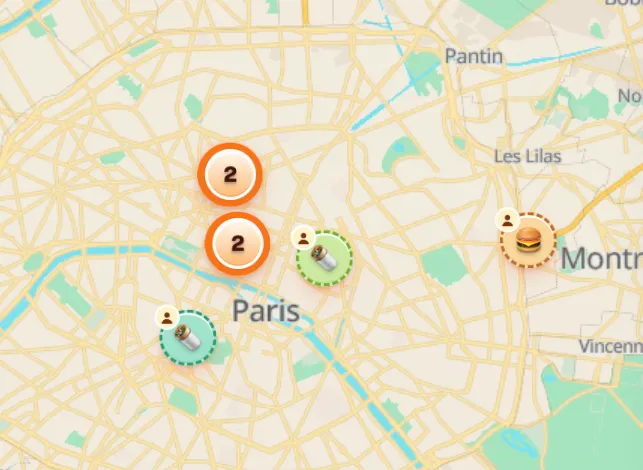
The best private restaurant list app for sharing with friends is Crumble: reviews and maps are friends-only by default, with no public feed and no profile strangers can find. Mapstr suits private saving of every kind of place, Google Maps lists need no install, Memolli is a personal-first record and Truffle is a small-circle journal.
Every friend group has the thread. Someone asks "where should we eat Saturday," and what follows is a screenshot of a storefront, a half-remembered name ("the Thai place near the cinema, or was it Vietnamese?"), and a link somebody posted in March that nobody can scroll back far enough to find. The same five people, the same twenty restaurants, rediscovered from scratch every weekend.
The fix is obvious: one shared list. The problem is what most food apps ask in exchange. Open an account and you get a public profile, a follower count, a feed of strangers dinners, and a leaderboard ranking you against people you've never met. If you wanted to broadcast your eating habits, you'd already be doing it. You don't: you want a private restaurant list app that works for exactly your circle and is invisible to everyone else.
Beli, the current default for restaurant tracking, is the clearest example of the trade-off: it's genuinely good, and its entire design is community-centric: rankings, streaks, an energetic public scene. If that's precisely what sent you searching, we've written a full guide to Beli alternatives; this page focuses on the apps where privacy isn't a setting you hunt for, it's the starting point.
What "private" actually means in an app
"Private" gets stamped on everything, so it's worth splitting into three models that behave very differently in practice:
- Private by default. Nobody sees your list until you explicitly approve them, and there's no public surface: no feed, no discoverable profile. Crumble, Mapstr, and Memolli work this way.
- Private if configured. The app is built around a community, and you can toggle visibility down after the fact. This is most social food apps, Beli included. It works, but the defaults fight you, and one missed toggle is public.
- Share-by-link. There's no friend system at all: content is private until you generate a URL, and then anyone holding that URL can see it. Google Maps saved lists are the canonical example: convenient, but a link forwards as easily as any link.
Truffle sits between the first two: it's a social journal, but scoped to a small circle by design rather than a public arena. All five apps below are classified honestly against these models in the table.
The five apps at a glance
| App | Privacy model | Food-specific | Friend map | Free |
|---|---|---|---|---|
| Crumble | Friends-only by default | Yes (per-dish ratings) | Yes, filtered to places you haven't tried | Yes |
| Mapstr | Private by default, share with chosen people | No (any place type) | Shared maps with picked contacts | Yes |
| Google Maps lists | Share-by-link | No | No (shared lists, not a friend layer) | Yes |
| Memolli | Personal-first, minimal social | Yes | Minimal | Yes |
| Truffle | Small-circle social journal | Yes | Friends journals (iOS / Android apps) | Yes |
1. Crumble: friends-only by default, built for food
Crumble is designed around exactly the group-chat problem: a shared food map for the people you actually eat with, and nobody else. There is no public feed. Your profile isn't discoverable by strangers, and your reviews are visible only to friends you've accepted: privacy isn't a settings page, it's the only mode.
- Per-dish tenth-of-a-star ratings (0–5). You rate what you ordered, not just the restaurant, so your history answers "what should I get here next time?": the question the group chat never can.
- A visited map plus a want-to-try wishlist. Saved places clear off the wishlist automatically the moment you review them, so the list stays a to-do, not an archive.
- Friends spots, filtered. Your friends places show on your map only where you haven't already tried them: recommendations without noise.
- Quiet gamification. XP and weekly challenges exist as a personal nudge, but there are no public leaderboards built over your data. Nobody is ranked against strangers.
- Runs anywhere. It's a free progressive web app at crumble.me: works in the browser on iPhone, Android, and desktop, and installs to the home screen. Mixed iOS/Android friend groups aren't a problem. Food passport, trips, and city recaps round out the personal record.
The privacy details are concrete rather than cosmetic. Photos you upload have EXIF GPS data stripped server-side, so an image of your regular breakfast spot can't quietly leak your neighborhood. The service is hosted in the EU and GDPR-compliant, there are no paid ads, and your data isn't sold: a planned paid tier, not on sale yet, is meant to be the business model, not you.
Why start here: it solves the group-chat problem without asking anyone to go public. Add the friends you actually eat with, save the places that keep coming up, and Saturday's "where should we eat?" becomes a look at one shared map. It's free, and it works on every phone in the group.
2. Mapstr: private saving for every kind of place
Mapstr is private-by-default place saving for your whole life, not just dinner: restaurants, bars, bookshops, viewpoints, all tagged however you like and shared only with people you pick. If your list is really "places" rather than "meals," it's a strong fit. What it doesn't do is food structure: there are tags, not ratings, and no dish-level memory, so it works better as a private atlas than a record of what was actually good.
3. Google Maps saved lists: the zero-setup option
Nobody has to install anything: star places into "Want to go" or a custom list, share the link with the group chat, done. It's free, it's everywhere, and it syncs across every device you own. The trade-offs are the privacy model (link-shared means anyone with the URL can look), the tie to your Google account, and the lack of any food features: no ratings history, no friend layer, no sense of who's actually been where. As a bridge while your group decides on a real tracker, though, it's unbeatable at the price.
4. Memolli: the personal-first record
Memolli leans hardest into "this list is for me": a personal restaurant record on a map, designed to be offline-capable, with only minimal social features. If sharing is an occasional nice-to-have rather than the point (you mostly want your own history, especially while traveling), its quietness is the feature. For a five-friend shared map, the minimal social layer becomes the limitation.
5. Truffle: the small-circle journal
Truffle keeps the social part of food tracking, seeing where friends eat, while dropping the arena: it's a clean restaurant journal shared with a small circle rather than a public community. The catch for group use is that it lives only in the app: it runs on iOS and Android, but there is no web version, so nobody can open the shared journal from a laptop.
Which app should you use for a private restaurant list?
Four questions settle it faster than feature lists:
- Is food the whole point? If yes, Crumble, Memolli, or Truffle. If the list is really "all our places," Mapstr.
- Does anyone plan dinners from a laptop? That eliminates Truffle, which has phone apps but no web version. Crumble (browser-based) and Google Maps cover everyone, desktop included.
- Do you want ratings or bookmarks? Bookmarks alone → Google Maps or Mapstr. If you want the list to remember what was good, down to the dish, you need structured ratings, which on this list means Crumble.
- How much social do you want? None → Memolli. A real friend layer with a shared map, but zero public exposure → Crumble or Mapstr.
If you're weighing the broader category beyond the privacy angle, our guide to the best restaurant tracking apps compares the whole field, and if you're starting from zero (no app, no system), start with how to keep track of restaurants, which covers the habit before the tool. If the list is shared with exactly one person, the restaurant list app for couples guide covers that setup.
When is a public platform fine?
Honesty corner: privacy is a preference, not a virtue. If you're new to a city and want recommendations from thousands of strangers, a big public community delivers that and a private circle of five can't. If leaderboards and streaks are what keep you logging, a competitive platform like Beli will hold your habit better than a quiet journal. And plenty of people genuinely enjoy a public food feed: sharing widely is the point, not the cost. The apps in this guide win when the audience you care about is the group chat, not the internet. If you're still deciding which side of that line you're on, the Beli alternatives guide looks at both.
Start your private restaurant list today
Crumble is free and works on every phone in the group, iPhone or Android, straight from the browser. Save the places that keep coming up in the chat, add the friends you actually eat with, and the list stays between you.
Frequently asked questions
What is the best private restaurant list app?
Crumble is the strongest option if you want a food-specific tracker that is private by default: no public feed, no public leaderboards over your data, and reviews visible only to accepted friends. Mapstr is a good pick if you save all kinds of places, not just restaurants, and Google Maps lists work if you only need link-shared bookmarks.
Can I share a restaurant list with friends without a public profile?
Yes. In Crumble your profile isn't discoverable by strangers and your reviews are visible only to friends you've accepted: there's no public feed to opt out of. Mapstr lets you share maps with specific people you choose. Google Maps lists can be shared by link, but anyone who gets that link can open the list.
Is there a restaurant tracking app without public leaderboards?
Crumble, Mapstr, and Memolli all skip public leaderboards. Crumble does have light gamification (XP and weekly challenges), but there is no public ranking built on your data, so it stays a personal nudge rather than a competition. Google Maps has no gamification at all.
Are Google Maps saved lists actually private?
They're private until you share them, and then they're link-shared, not friend-shared. Anyone holding the link can view the list, and it's forwarded as easily as any URL. That's fine for a casual weekend list, less fine if you're mapping every place you eat near your home.
Can a photo in a restaurant app reveal where I live?
It can, if the app keeps the photo's EXIF data: phone cameras often store GPS coordinates in the file. Crumble strips EXIF GPS data server-side on upload, so a photo of your regular breakfast spot does not carry your neighbourhood with it.
Can strangers find my profile on Crumble?
No. Your profile is not discoverable by strangers and your reviews are visible only to friends you have accepted. There is no public feed to opt out of, because there is no public feed.