
Dietary Restaurant Tracker: Vegan, Halal, Gluten Free
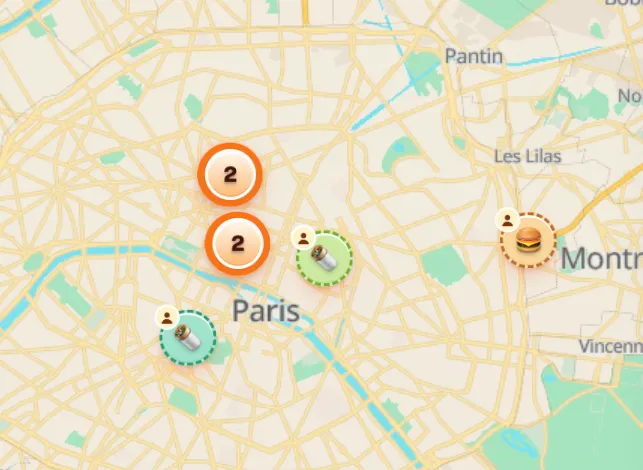
Every app with a dietary filter has the same failure, and anyone who eats to a restriction has been burned by it: a place is marked safe because somebody once tagged it that way. One tag, no evidence, and you find out it was wrong when you are already sitting down.
This is what a dietary restaurant tracker does instead. Five diets, two ways a place can pass, and a default that fails closed rather than guessing.
A dietary restaurant tracker covers five diets
The map filters on vegan, vegetarian, halal, kosher and gluten free. Not a free-text tag cloud, five explicit filters, which is what lets each one have its own logic rather than everything sharing a vague "dietary" flag.
You can also declare your own preference on your account. Worth being precise, because plenty of apps overreach here: declaring a preference does not silently filter your map. The map filter stays a manual toggle you control. What the preference does do is keep the challenge system from asking a vegan to go and log eggs benedict.
Two ways a place can pass a filter
This is the part worth understanding, because it is where most apps are careless.
One: an explicit dietary label. A place carries a real label, and that label bypasses every other check. This is the strong signal, and it is why not everyone can apply one: attaching a dietary label to a place is gated behind a permission rather than open to any account. A halal tag that anyone can add is worth nothing, because the cost of a wrong one falls entirely on the person trusting it.
Two: safe by composition. With no explicit label, a place can still pass if every category on it is safe for that filter. A specialty coffee bar has nothing on it that conflicts with halal, so it passes on composition. The test is total: one category outside the safe set and the place fails.
The default is no, not maybe
Here is the rule that matters more than either path: an uncategorised place fails the filter. It is not shown with a caveat, not shown greyed out, not shown at all.
The tempting design is the opposite, because it makes the filtered map look fuller and a fuller map feels like a better product. It is the wrong call. The cost of a false positive is not symmetric with the cost of a false negative. Missing a restaurant you could have eaten at is a mild annoyance. Being sent to one you could not is the actual harm the filter exists to prevent, and for coeliac disease or an allergy it is not a matter of annoyance at all.
So the filter fails closed. If we do not know, the answer is no.
Filtering is only half of it
Every dietary app on the market solves discovery: where can I eat in a city I do not know. Almost none solve the second half, which is the one you live with day to day: which of the places I have already been were actually fine, and what did I order there.
That is the gap a tracker fills. You rate the dish, not the restaurant, so the record says the falafel wrap was good and not merely that the place "does vegan". Your note holds the thing you will otherwise forget: which dish, which substitution, whether the kitchen understood the question. Six months later that note is worth more than any directory listing.
And because it is your own record, it does not decay when a place changes its menu and forgets to update a listing somewhere.
Where a directory still wins
Being straight about this: in a city you do not know, a dedicated directory beats a personal map and it is not close. HappyCow has spent years building vegan coverage that no personal record replicates, and on day one in an unfamiliar city your own map is empty.
The two are answering different questions. A directory answers "where can I eat here". A tracker answers "where have I eaten that worked". Use the directory to find the place and the tracker so that next time you do not have to look it up at all. We went into that split properly in our HappyCow alternative guide, including where HappyCow is simply the better tool.
Eating with people who eat differently
The case nobody designs for is the group. One vegetarian, one coeliac, one person who eats anything, trying to pick somewhere on a Thursday. A directory filtered to one diet does not help, because the constraint is the intersection.
A friends map does, quietly: your friends spots are on it, and if the vegetarian in the group has already rated a place well then it has already passed the only test that matters. The filter narrows the map, and the ratings from people who eat the way you do tell you which of the survivors is any good.
Starting
Set your preference, then log the places you already trust. Ten entries of somewhere you have eaten safely is more useful on a bad day than a thousand listings you have never tested. Our guide to keeping track of restaurants covers the habit, and a wishlist holds the ones you have been meaning to try.
Frequently asked questions
Which diets can you filter a food map by?
Five: vegan, vegetarian, halal, kosher and gluten free. They are explicit filters rather than free-text tags, which is what lets each one carry its own logic instead of everything sharing a vague dietary flag.
How does a place qualify as vegan or halal?
Two ways. Either it carries an explicit dietary label, which is gated behind a permission rather than open to every account, or it passes by composition: every category on the place is in the safe set for that filter. A single category outside the set and it fails.
What happens to places with no categories?
They fail the filter and are not shown. That is deliberate. Missing a place you could have eaten at is a mild annoyance, while being sent to one you cannot eat at is the exact harm the filter exists to prevent. When the answer is unknown, the filter says no.
Does setting a dietary preference filter my map automatically?
No. The map filter stays a manual toggle you control, and declaring a preference does not silently change what you see. What the preference does is keep the weekly challenge system from suggesting food you do not eat.
Is a tracker better than HappyCow for finding vegan restaurants?
No, and we would not claim it. In a city you do not know, a dedicated directory wins and it is not close: HappyCow has coverage no personal map replicates, and your own map starts empty. The two answer different questions. A directory answers where you can eat here, a tracker answers where you have eaten that worked and what you ordered.
How do you pick a restaurant for a group with different diets?
The constraint is the intersection, which no single-diet directory handles. A friends map helps because places your friends have already rated are on it: if the person with the restriction has eaten somewhere and rated it well, it has passed the only test that counts. Filter the map, then let the ratings decide between what is left.