
How to Keep a Cooking Journal and Track What You Cook
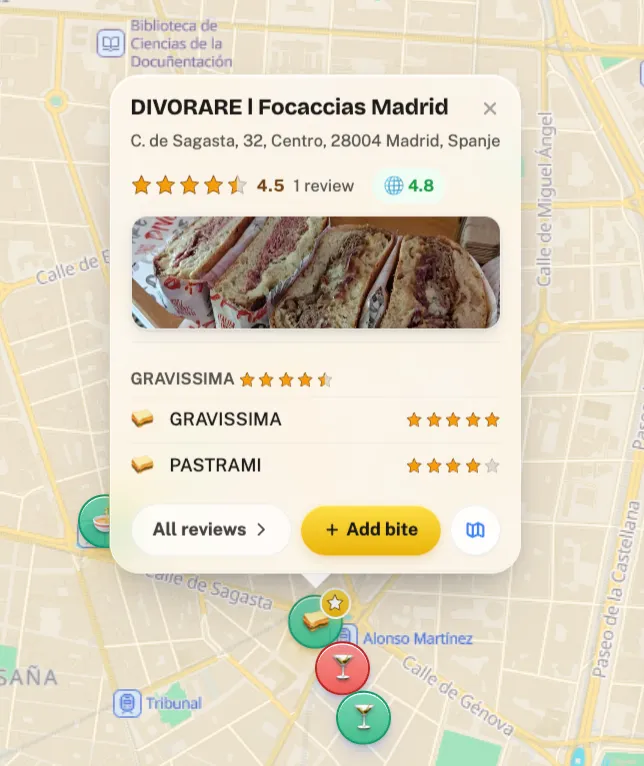
To keep a cooking journal that lasts, log each dish with three things: its name, a rating given while you are still eating, and one line on what you would change, then attach the recipe you used. That takes about twenty seconds an entry, and it is the version people are still doing after a month.
Most people who start tracking what they cook stop within a month, and it is almost never because they stopped cooking. It is because they set up something that takes ten minutes an entry: ingredients, quantities, method, timings, a styled photo. That is a second job, and you already made dinner. Here is the version that survives, and it gets better the longer you do it.
How to track what you cook: the twenty second version
- Name the dish, not the meal. "Ragu" beats "dinner". You are building something you can search later, and nobody searches for dinner.
- Give it a number while you are still eating. Not afterwards. Ten minutes later you will round it to a comfortable answer.
- One line on what you would change. "More salt", "too dry", "needed 20 minutes longer". This is the single most valuable field and it takes four words.
- Take the photo before you plate it nicely. The photo is a memory aid, not content. A bad photo of the real thing beats a good photo you never took.
- Attach the recipe. Link or text. This is the one step that turns a log into something useful.
That is it. If you do only steps one, two and five you still end up with something worth having in six months.
How should you rate your own cooking?
The instinct with your own cooking is to be either far too generous or far too hard, and both make the record useless. Generous and everything is a 4.5, so nothing stands out. Hard and everything is a 3, so you cannot see yourself improving.
The fix is to rate against what you were trying to make, not against a restaurant. A weeknight pasta that did exactly what a weeknight pasta should do is a good score. It is not competing with a tasting menu and it never was.
Use a fine scale if you have one. Crumble rates from 0 to 5 in tenth-of-a-star steps, and that is not fussiness for its own sake: cooking improves in small increments, and a scale that only moves in halves cannot show you the difference between your third ragu and your fourth. The whole point of logging is to see that difference.
Keep the recipe with the dish, not in a folder
This is where most systems fall down. The recipe lives in a bookmark, a screenshot, or a website you will not find again, and the record of how it went lives somewhere else entirely. Six months later you have the memory that it was good and no way to repeat it.
So attach the recipe to the entry. In Crumble a home-made review takes up to ten recipes, and each one is a title plus either a link or the method typed out as text, up to 5000 characters. That second option is the one that matters, because the version worth keeping is rarely the version you found. It is that one with your two changes in it, and a link cannot hold those.
A good pattern: paste the link the first time, and once you have cooked it twice, type out the version you actually make now. That is a recipe you own.
Put your kitchen on the map
The other habit that keeps this going is refusing to split your cooking off from the rest of your eating. If home cooking lives in one app and restaurants live in another, one of the two gets abandoned, and it is always the one with fewer entries.
In Crumble your home is a real place on your own map, with an emoji you pick for it, and a home-made dish is the same kind of entry as anything else: same rating scale, same photos, same category emoji. It earns XP and keeps your streak exactly like eating out does. The one thing it will not do is unlock a country flag, because your kitchen is not travel.
It is also private by construction. A home-made entry carries no venue identity, is kept off the shared map layer, and its coordinates are not exposed to other people. If you share a year recap publicly, home-made entries are stripped of their names automatically. Friends see the dish, the rating and the recipe, which is the part worth sharing.
What should you log in a cooking journal?
| Worth logging | Why |
|---|---|
| Anything you might make again | This is the whole point. The rating plus one note is what makes attempt two better. |
| The failures | A 2.5 with "way too much vinegar" is worth more six months later than another 4.5 you cannot learn from. |
| A dish you are working on | Repeat attempts are where a log stops being a diary and starts being useful. |
| Something someone cooked for you | You will want that recipe eventually, and asking now is easier than remembering later. |
| Skip: toast, cereal, the same lunch every day | Logging every input is calorie-counter behaviour and it burns the habit out in a fortnight. |
Make it survive month two
Three things kill a cooking log, and all three are avoidable.
- Too many fields. If your system asks for grams and timings every time, you will stop. Name, number, one note. Add detail only where you actually want it.
- Logging later. "I will add it tonight" is where entries go to die. Log at the table, badly, in twenty seconds.
- Perfectionism about the photo. The photo is for you. Nobody is scoring the plating, and the entry you skipped because the light was bad is an entry you do not have.
And the test of whether it is working: in six months, can you answer "what should I cook this week" from your own record? If yes, the system is doing its job. If you are still scrolling a recipe site, it is not.
Which app should you use to track what you cook?
The method above works in a notes app, and if that is what you will actually keep, use it. Where a dedicated tool earns its place is repeat attempts, a fine rating scale, the recipe living on the entry, and your cooking sitting next to your eating out instead of in a separate silo.
We compared the options, including the ones that are better than us at parts of this, in our guide to home cooking journal apps. If you want a shopping list and a meal planner rather than a record, that guide says plainly which tool to buy instead.
Leaving an app you already use? Our CookDiary alternatives page is an honest comparison, and gamified cooking apps covers the ones built around streaks and rewards.
For the other half of the habit, how to keep track of restaurants covers eating out, and tracking food on your travels covers the trips.
Start your cooking journal tonight
Crumble is free and runs in the browser you already have. Log tonight’s dinner with a name, a 0 to 5 rating and one line on what you would change, attach the recipe, and you have started.
Frequently asked questions
What should you write in a cooking journal?
Four things are enough: the name of the dish, a rating you give while still eating, one line on what you would change next time, and the recipe, either as a link or typed out with your own changes. A photo helps as a memory aid. Ingredients with exact quantities and timings are optional, and asking for them every time is the main reason cooking journals get abandoned.
Is there an app to keep track of what you cook?
Yes, several. Crumble logs a home-made dish with a photo, a 0 to 5 rating in tenth-of-a-star steps and up to ten attached recipes, next to your restaurant meals. CookDiary is built around comparing repeat attempts at the same dish. Our comparison of home cooking journal apps covers the options, including where a notes app is enough.
How do you keep a cooking journal without it becoming a chore?
Cut it to three fields: the dish name, a rating, and one line on what you would change. Do it at the table rather than later, and take the photo before you plate it nicely. That is about twenty seconds an entry. Systems that ask for ingredients, quantities and timings every time are the ones people abandon inside a month.
How should you rate your own cooking?
Against what you were trying to make, not against a restaurant. A weeknight pasta that did its job deserves a good score. Use a fine scale if you have one: Crumble rates in tenth-of-a-star steps from 0 to 5, which matters because cooking improves in small increments and a half-star scale cannot show the difference between your third attempt and your fourth.
Where should you store the recipe?
On the entry itself, not in a separate folder. The usual failure is a recipe in a bookmark and the record of how it went somewhere else, which leaves you knowing it was good and unable to repeat it. In Crumble a home-made review holds up to ten recipes, each a link or the method typed out as text up to 5000 characters, so you can keep the version with your own changes rather than only the original.
Should you log meals that went badly?
Especially those. A low score with one line saying what went wrong is worth more later than another good score you cannot learn anything from. The failures are what make the second attempt better, and they are the entries people are most tempted to skip.
Is it worth tracking home cooking and restaurants in the same place?
Yes, and splitting them is why one of the two records gets abandoned, usually the smaller one. Keeping both in one history also lets you answer questions no single-purpose app can, such as whether the thing you keep paying for is actually better than the version you make.