
How to Track the Beer You Drink
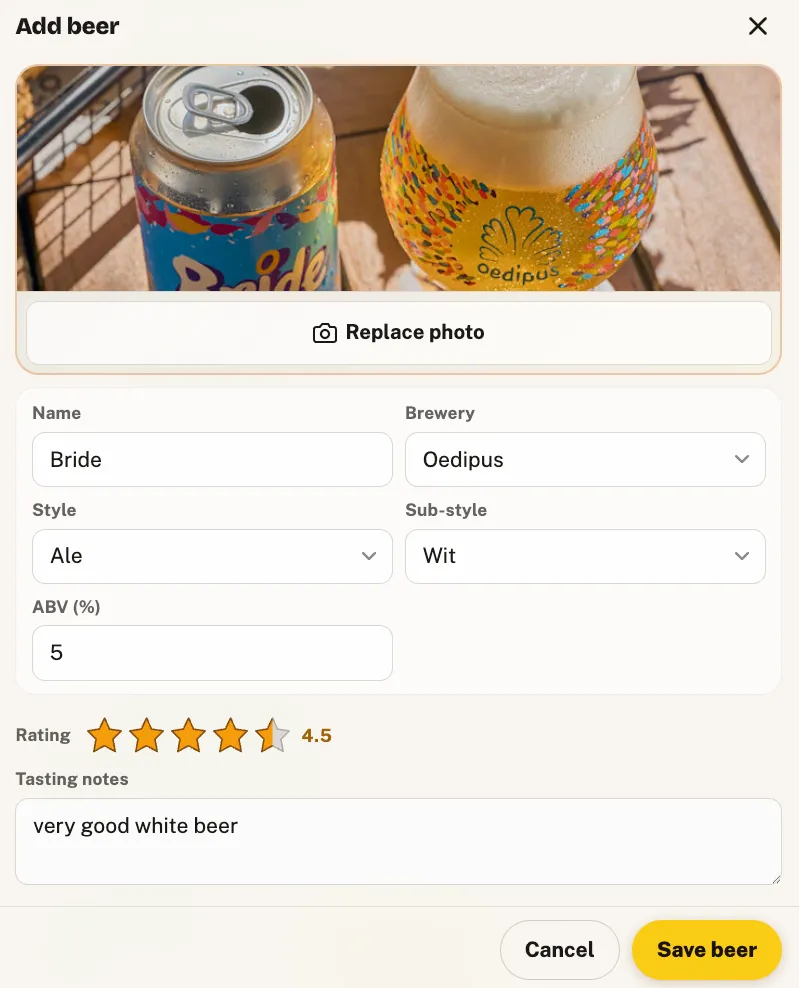
Tracking beer well means going one step past the check-in: scoring what's actually in the glass — six quick axes and a line — so that when a brewery's hazy IPA shows up on a menu next year, you know whether past-you loved it or just logged it. With thousands of breweries shipping new releases weekly, beer has more one-time encounters than any other drink. The tap list moves on; your notes are what's left.
Check-in vs. journal
A check-in says I had this. A journal says this is what it was like. Untappd built the world's check-in layer and it's excellent at that job — badges, community ratings, what's pouring nearby. The journal layer is the quieter, more personal one: your scores, on your axes, comparable across years, visible to the friends you actually drink with. That's the lane Crumble's free beer add-on lives in — and the two coexist happily. (Crumble Plus adds an AI label scan on top.) If you're weighing the two side by side, we wrote up the honest comparison separately.
Six axes for the glass
- Sweetness — from bone-dry pilsner to pastry-stout dessert.
- Bitterness — the backbone; how hard the finish bites.
- Body — spritzy-light to motor-oil imperial stout.
- Hops — the character, not just the number: citrus, pine, tropical, dank.
- Malt — bread, caramel, toffee, roast; the floor everything stands on.
- Finish — clean exit or lingering encore, and which the beer earned.
Note the format too — draft, bottle, can — because the same beer genuinely drinks differently, and "had it on cask once, revelation" is a note worth having. The radar builds your palate map over time: if everything you score high is heavy on hops and light on sweetness, the next unfamiliar tap list just got easier.
One beer, written down properly
Here's what a thirty-second entry actually looks like, so the six axes stop being abstract. The beer: a hazy IPA on draft at the brewery's own taproom.
- Sweetness 2/5 — soft fruit up front, nothing sugary.
- Bitterness 2/5 — gentle for an IPA; the bite never really lands.
- Body 4/5 — pillowy, almost smoothie-thick.
- Hops 5/5 — mango and grapefruit, huge aroma before the first sip.
- Malt 2/5 — barely there, just enough floor to hold the fruit up.
- Finish 3/5 — juicy exit that fades fast; asks for another sip.
Free line: "Basically juice. Lost its shine as it warmed — order the small pour and drink it cold." That last sentence is the part future-you will actually use. Numbers make beers comparable; the one honest observation is what tells you whether to order it again. If either half is missing, the entry is half as useful.
Your shelf, for the bottles worth waiting on
Most beer is drunk the week it's bought, but the cellar corner — lambics, barley wines, imperial stouts with a vintage on the label — rewards records. Shelf entries with dates let you taste the same bottle across years: the same gueuze at one and three years is two different beers, and your journal is the proof.
Breweries and bars on the map
Taprooms, brewery tours, the bar with the impossible rotating list — the venue half is free on Crumble. Log the brewery as a spot, rate the flight, wishlist the ones you haven't reached. A brewery-hopping weekend becomes a trip with its own recap, and your friends inherit the good taprooms through the shared map.
Match the effort to the setting
Not every pour deserves the same paperwork. The trick is deciding in advance what's worth writing down where:
- Taproom flight — four small pours is a comparison, not four journal entries. Score the one or two that stood out, note the flight's loser in a word, and log the taproom itself as a spot so the visit lands on your map.
- Bottle shop haul — log at drinking time, not checkout time. A haul entry tells you what you bought; a glass entry tells you what it was like. The vintage-dated bottles go on the shelf with a date and wait their turn.
- Festival — the lowest bar wins. Brewery, beer, one overall score, done. Save full six-axis notes for the two or three pours that genuinely surprised you; everything else is noise by the fourth token.
The pattern: full notes when the beer has your attention, a one-line score when it doesn't, and always the venue — because the place is the part you'll search for later.
The three habit-killers
Most beer journals don't die from lack of interest — they die from one of three self-inflicted wounds:
- Rating from memory the next morning. Yesterday's fourth beer gets yesterday's fourth-beer accuracy. A score written at the table in thirty seconds beats a paragraph reconstructed over coffee. If you missed the moment, log the beer without scores rather than inventing them.
- Trying to log every beer in a flight. Entry fatigue is real; the night you spend more time typing than tasting is the night the habit starts dying. See the flight rule above — standouts only.
- Completionism. The journal is not a census. Skipping the forgettable lager at a wedding doesn't invalidate anything; a journal with gaps you kept is worth infinitely more than a complete one you abandoned in March.
The rest of the shelf
The same shelf-and-sessions journal covers whisky, wine, specialty coffee, tea, and matcha — each scored in its own language. One app for everything you pour, all free — Crumble Plus adds the AI label scan. Still picking a tool? The beer tracking apps roundup compares the field.
Frequently asked questions
What is the best app to track beers?
Untappd is the biggest by far — check-ins, badges, and a massive community database. Crumble's free beer add-on is the quieter option: a private journal with six-axis tasting notes, your bottle shelf, and breweries on the same map as your restaurants, shared with friends only. Different jobs; some people run both.
What should beer tasting notes include?
The beer (brewery, name, style), the format (draft, bottle, can — the same beer drinks differently), and six consistent scores: sweetness, bitterness, body, hops, malt, finish. One free line for the rest. Consistency is what makes a hazy IPA from spring comparable with the one in your glass now.
Is there a beer journal that is not social?
Yes — that's the gap Crumble sits in. Reviews stay inside your accepted friends list: no public feed, no global check-in stream, no strangers rating your taste. The journal is for you and the people you actually drink with.
How do I keep track of breweries I have visited?
Log the brewery or taproom as a spot — free on Crumble — rate what you drank there, and wishlist the ones you haven't made it to. Brewery-hopping on a trip groups into a trip recap automatically.