
How to Track Your Whisky: Bottles, Drams & Tasting Notes
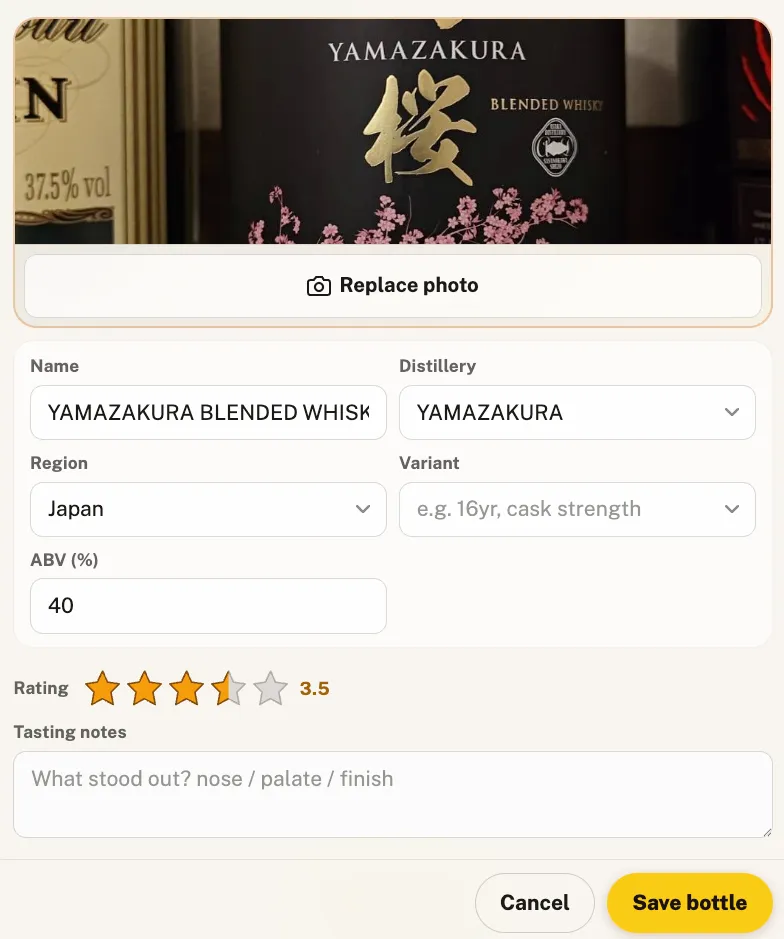
Tracking whisky means two records: the bottles on your shelf and the drams you pour from them — scored the same way every time, so the Islay you loved in January can be honestly compared with the Speyside you're tasting tonight. Whisky punishes a bad memory more than most drinks: bottles cost real money, live for years, and change slowly as they oxidize. "I think I liked it?" is an expensive way to restock.
(Whisky or whiskey? Both. Scotland and Japan drop the "e", Ireland and most American bourbon and rye keep it. Your journal doesn't care how the label spells it, and neither does this guide.)
The shelf: one entry per bottle
Each bottle gets logged once: distillery, region, age statement (or NAS), strength, and — the detail almost everyone skips — the date you opened it. An open bottle evolves: fine for months, then noticeably softer once it drops under a third full. Dated entries let you separate "this whisky got worse" from "this whisky got oxidized". In Crumble's whisky journal (a free add-on), the shelf is built in — and with Crumble Plus a label scan fills in distillery and style for you.
The dram: six axes, every pour
- Sweetness — honey, toffee, dried fruit; bourbon casks push this hard.
- Smoke — from none (most Speysides) to medicinal peat-monster (south-coast Islay).
- Fruit — orchard fruit, citrus, sherry-cask raisins and figs.
- Spice — pepper, ginger, clove; often what people call "heat" that isn't alcohol.
- Oak — vanilla, tannin, that dry woody grip of long cask time.
- Finish — how long it stays, and whether you're glad it does.
Radar first, prose second. One line like "campfire + lemon, finish goes on forever" plus six scores takes thirty seconds and builds something prose alone never gives you: after twenty drams, the radar shapes show your palate. Maybe everything you score high bulges on smoke and finish — congratulations, you're an Islay person; buy accordingly.
Bars, distilleries, and the map
Whisky bars with thousand-bottle walls, distillery tours, that pub with the surprisingly good single-malt shelf — they belong on your map, and that part of Crumble is free. Log the venue, rate what you drank, wishlist the bars you haven't made it to. Touring Scotland or Japan? Your distillery visits group into trips automatically.
Habits that make whisky notes worth keeping
- Score before you add water — then again after, if the water changed everything. Two entries for one dram is fine; that's data.
- Re-taste your favourites blind. Pour two similar drams, have someone hide the labels, score both. Your journal keeps you honest about whether you love the whisky or the label.
- Note the context when it's unusual. A dram after a curry scores differently than one on a quiet evening. One word of context ("post-dinner") explains outliers later.
- Log the misses too. A 2-star dram you'll never rebuy is exactly the entry that saves you €60 in a duty-free shop two years from now.
The rest of the shelf
The same shelf-and-sessions journal covers wine, beer, specialty coffee, tea, and matcha — each with axes in its own language. One app for everything you pour, all free — Crumble Plus adds the AI label scan.
Weighing up apps instead? See our roundup of the best whisky tracking apps — Whiskybase, Distiller, Drammer, and more, compared honestly.
Frequently asked questions
What should whisky tasting notes include?
Score the same axes every dram so notes compare across bottles: sweetness, smoke, fruit, spice, oak, and finish. Add the bottle context (distillery, age or NAS, strength, how long the bottle has been open) and one free line. Consistent axes beat poetic prose — "heather honey on a sea breeze" is fun to write and useless to compare.
Is there an app to track my whisky or whiskey collection and tasting notes?
Yes — Crumble's free whisky add-on keeps your bottles on a shelf and logs each dram as a tasting session with a six-axis flavor radar. With Crumble Plus, scanning the label fills in distillery and style details for you. Whisky-specific apps and community databases also serve collectors who want bottle-price tracking.
Does whisky go off after opening the bottle?
Slowly, yes — oxidation changes an open bottle over months, and the effect accelerates once it drops below about a third full. That's a reason to date your bottles and re-score an old favourite occasionally: if the last third of the bottle tastes flatter than your first note, it isn't your imagination.
How do I remember which whisky bars I liked?
Track the bar itself like any spot on Crumble — that part is free. Rate what you drank there, keep the whisky bars you still want to visit on your wishlist, and your friends inherit your finds through the shared map.