
How to Track Specialty Coffee: Beans, Brews & Tasting Notes
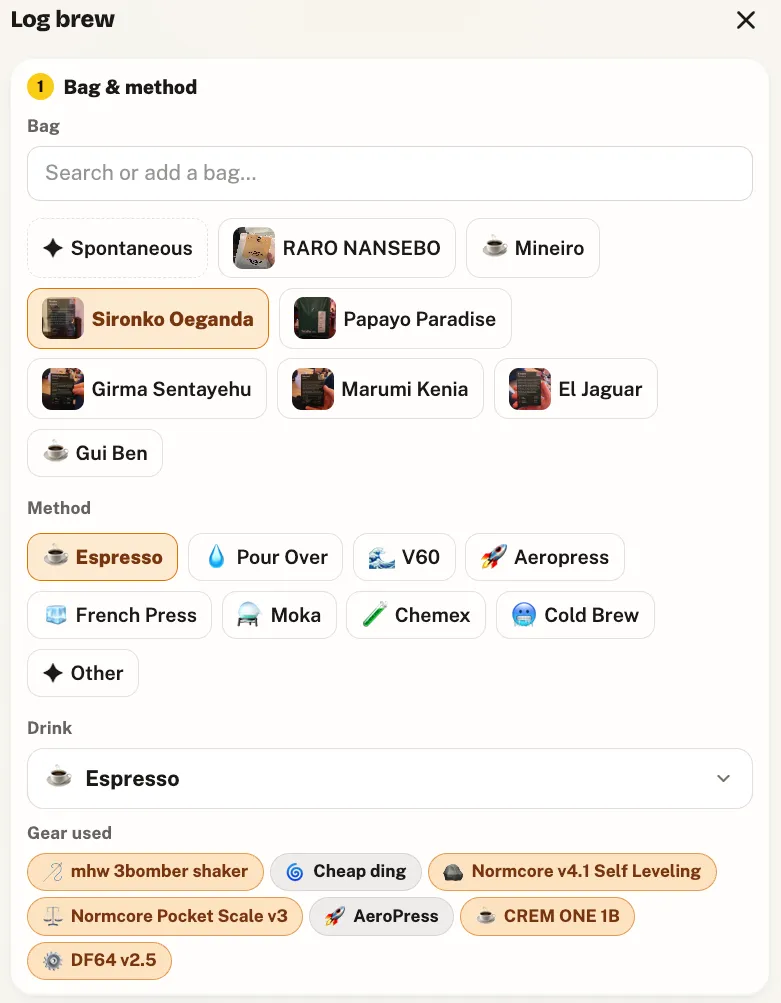
To track specialty coffee properly you need to log three layers: the beans you buy, the brews you make, and the cafés you visit — each with notes you can compare later. Memory alone fails fast: was the Ethiopian from that Berlin roaster the bright one, or was that the Kenyan? After the tenth bag, every great coffee you've had blurs into "something fruity, I think."
Layer 1: your bean shelf
Every bag that enters your kitchen gets one entry: roaster, origin, process, roast date. That's the index your tasting notes hang off — "this brew" means nothing in March if you don't know which bag it came from. In Crumble's coffee journal (a free add-on) the shelf is built in — and with Crumble Plus you don't even type: scan the bag's label and the AI fills in the roaster, origin, and style.
Layer 2: tasting sessions, scored consistently
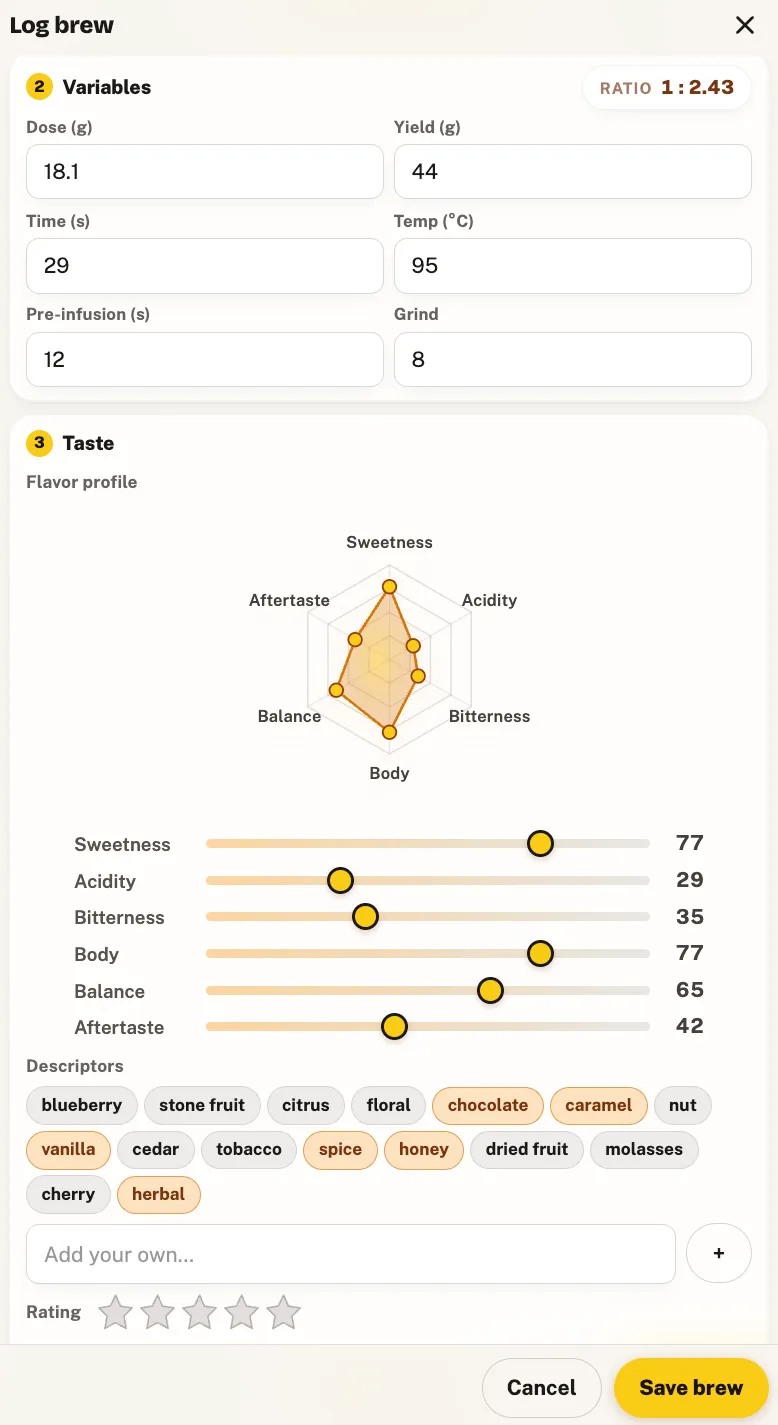
The trap with free-text notes is that they don't compare. "Lovely and juicy" versus "bright, maybe too sharp" — which coffee was better? Consistent axes fix this. Crumble scores every coffee session on six:
- Sweetness — the honest kind, not added.
- Acidity — the brightness that makes washed Ethiopians sing (or sting).
- Bitterness — present in all coffee; the question is whether it behaves.
- Body — watery to syrupy.
- Balance — do the parts agree with each other?
- Aftertaste — what's left thirty seconds later, and do you want more of it?
Score those six on a radar, add one free line ("blueberry jam, almost wine-like"), done — it's a simplified version of how professional cuppers work, compact enough to fill in while the cup is still warm. Six months of sessions becomes a flavor map of your own palate: you'll see that you consistently score natural-process coffees higher, or that your taste for acidity is climbing.
Layer 3: the cafés
Specialty coffee lives in cafés as much as kitchens — and café tracking is free on Crumble. Log the coffee shop like any spot: rate the flat white and the batch brew separately with half-star precision, keep the espresso bars you still want to try on your wishlist, and let friends inherit your finds through the shared map. Travelling? Your café finds group into trips automatically.
Habits that keep a coffee journal alive
- Log the first cup of every new bag, not every cup. Day-to-day brews of the same bean barely move; new-bag entries capture everything worth comparing.
- Score first, describe second. The radar takes ten seconds and is the part you'll actually use later; the prose is a bonus.
- Re-taste your 5-star beans. When a bag scores top marks, buy it again months later and score it blind. Palates drift — your journal is how you notice.
- Don't gatekeep yourself. A great supermarket bean scored honestly is better data than an aspirational journal of only single-origin pour-overs.
Beyond coffee
The same shelf-and-sessions model covers five more drinks on Crumble: tea, matcha, wine, whisky, and beer — each with its own six axes (tannin and oak for wine, smoke and spice for whisky). One app, every pour — all free. Crumble Plus adds the AI label scan.
Comparing apps rather than building the habit? Our roundup Untappd for Coffee: 7 apps to log every cup covers the whole field, from Beanconqueror to café-check-in apps.
Frequently asked questions
What should I write in a coffee tasting journal?
Four things per cup: what bean it was (roaster, origin, roast date), how you brewed it (method, ratio, grind), a score across a handful of consistent axes — sweetness, acidity, bitterness, body, balance, aftertaste — and one free-text line. Consistent axes are what make entries comparable months later.
Is there an app to track coffee beans and tasting notes?
Yes. Crumble's free coffee add-on keeps a shelf of your beans, logs each brew as a tasting session, and scores it on a six-axis flavor radar. With Crumble Plus, you can scan the bag's label and the AI fills in roaster, origin, and style. Dedicated brew-logging apps like Beanconqueror also serve this niche with deep equipment tracking.
How do I keep track of coffee shops I have visited?
That part is free on Crumble: log the café like any other spot, rate the drinks you ordered with half-star precision, and the shop lands on your map. Your wishlist holds the cafés you still want to try, and friends see your finds on the shared map.
What are the six flavor axes for coffee?
Crumble scores coffee on sweetness, acidity, bitterness, body, balance, and aftertaste — a simplified take on how professional cuppers evaluate coffee, compact enough to fill in while the cup is still warm.
Is the Crumble coffee journal free?
Yes. The coffee journal — like all six of Crumble's tasting journals (coffee, tea, matcha, wine, whisky, beer) — is a free add-on for every account, and café tracking on the map is free too. Crumble Plus (from €1.99) adds the AI label scan that fills in a bag's details from a photo, plus the AI food scanner, unlimited wishlist, and uncapped Crumb Hunt.