
How to Track Your Matcha: Tins, Tastings & Umami Notes
Tracking matcha means logging two things: the tins you buy and the bowls you make from them — scored the same way every time, so a tin from Uji and a tin from Yame can actually be compared. Matcha is expensive, wildly variable between producers, and it degrades from the day you open the tin. Without notes, you're re-buying blind every time.
Start with the tin
One entry per tin: producer, region if you know it (Uji, Yame, Nishio…), grade, and the date you opened it. The opening date matters more for matcha than almost any other drink — oxidation flattens the aroma within weeks, so "this tin scored 3 on aroma" needs the context of "in week six". In Crumble's matcha journal (a free add-on) tins live on your shelf, and with Crumble Plus scanning the label fills in the details for you.
Score every bowl on the same six axes
- Sweetness — good matcha carries a natural sweetness with zero sugar.
- Umami — the axis that matters most. That deep, savory, dashi-like roundness is what shade-growing creates and what you're paying for in ceremonial grades.
- Bitterness — a little is structure; a lot is either the grade or your water temperature.
- Body — thin and tea-like, or dense and almost creamy.
- Aroma — fresh grass, nori, white flowers; the first thing oxidation steals.
- Aftertaste — the sweet echo that lingers after a good bowl.
Ten seconds on the radar, one free line ("kombu sweetness, zero harshness — best of the shelf"), and the bowl is on record. Over a few months the radar shapes tell you things prose never would: every tin you love bulges on umami and aroma; the ones you abandon spike on bitterness.
Lattes and cafés count too
Matcha lattes, koicha, iced usucha at the matcha bar across town — log them. Café drinks are how most people drink matcha, and the matcha bars themselves belong on your map: tracking the cafés you visit is free on Crumble, with per-drink half-star ratings and a wishlist for the spots you haven't made it to. Your friends inherit your finds through the shared map.
Three habits for better matcha notes
- Taste the first bowl plain. Whatever you normally drink, score each new tin once as straight usucha — it's the only fair comparison between tins.
- Note your water temperature once. If you always brew at ~75°C, write it in the tin entry, not every session. Only log deviations.
- Score the tin again in week six. One late-life entry per tin teaches you how fast each producer's matcha fades — and how much of that big tin you can realistically finish in time.
A simple matcha tasting template
Want to start on paper or in a notes app before using a dedicated journal? Copy this matcha tasting notes template — it's the same structure Crumble uses:
- Tin: producer · region · grade · date opened
- Preparation: usucha / koicha / latte · dose · water temperature
- Scores (1–5): sweetness · umami · bitterness · body · aroma · aftertaste
- One line: the bowl in your own words
- Verdict: rebuy? gift? daily driver or special occasion?
When the paper version stops scaling, the same template lives in Crumble with the radar, the shelf, and the label scan built in.
The rest of the shelf
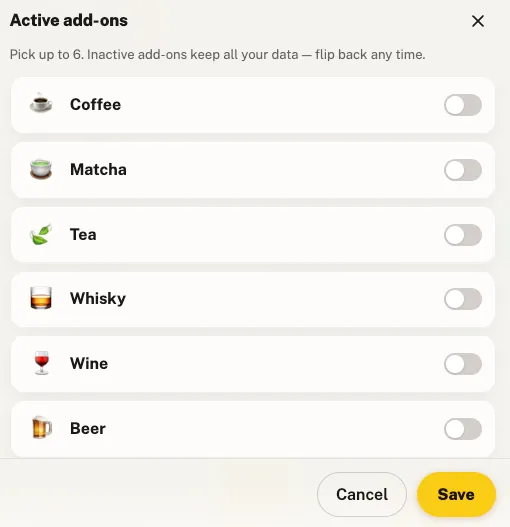
The same journal model covers specialty coffee, tea, wine, whisky, and beer — each with axes that speak that drink's language. One app for everything you sip, all free — Crumble Plus adds the AI label scan.
Frequently asked questions
How do I keep track of the matcha I buy?
Give every tin one entry — producer, region, grade, and when you opened it — then log bowls against that tin. Matcha oxidizes fast once opened, so dated entries also tell you why the same tin tastes flatter in week six. Crumble's free matcha add-on keeps this shelf for you, and with Crumble Plus a label scan fills in the details.
What should matcha tasting notes include?
Score the same axes every time so bowls compare: sweetness, umami, bitterness, body, aroma, and aftertaste. Umami is the axis that separates ceremonial-grade matcha from culinary — a deep, savory, almost broth-like quality. Add one free line for the rest ("seaweed and white chocolate, no harshness").
Is there an app for matcha tasting notes?
Yes — Crumble's matcha journal (a free add-on) logs tins on a shelf and tastings as sessions with a six-axis flavor radar tuned to matcha, umami included. Tracking the matcha bars and cafés you drink at lives in the same app.
Why does my matcha taste different from one bowl to the next?
Water temperature, whisking, dose, and the tin's age all move the cup. That's exactly what a journal catches: when entries against the same tin diverge, the variable is your preparation; when a fresh tin scores below an old favourite, the variable is the matcha.