
4 Best Beanconqueror Alternatives in 2026
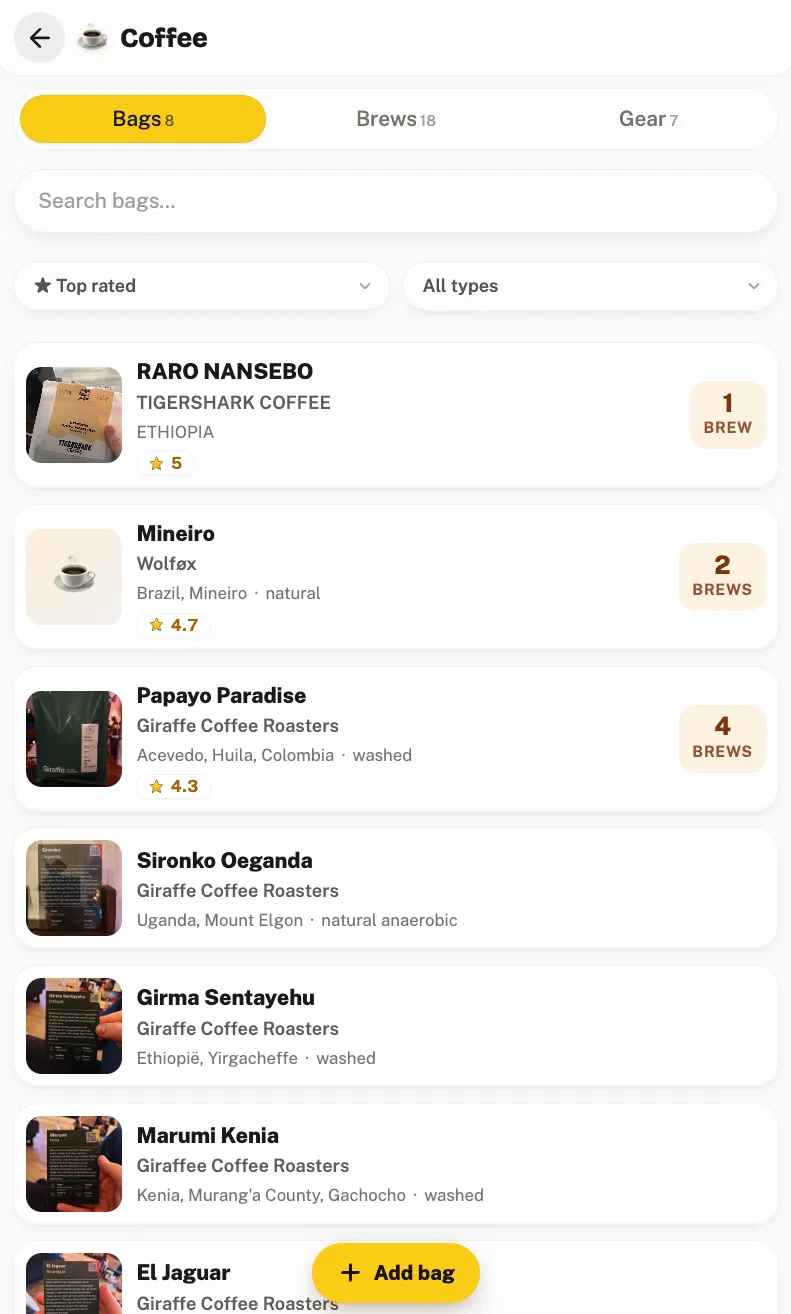
Beanconqueror is brew-parameter software (grind, dose, yield, pressure, water chemistry) and it is free, open source and very good at that. If what you want is to remember which beans and which cafés you liked, that is a different job, and Crumble, Filtered or even a notes app fit it better.
Let us be unambiguous, because this is the rare case where the incumbent is excellent and free. Beanconqueror is open source, runs on iOS and Android, and models brewing in real depth: preparation methods from espresso to V60 to AeroPress with their own parameters, bean details scanned or imported from roasters, a dedicated water section for general hardness, sodium, calcium and magnesium, and Bluetooth integration with scales and pressure devices including Acaia, Decent, Felicita and Eureka Precisa.
For dialling in an espresso (changing one variable, brewing again, comparing shots), nothing on this page competes, and we are not going to pretend otherwise. It is one of the best pieces of free software in any hobby.
So the reason people look for Beanconqueror alternatives is almost never that it is bad. It is that they are not that person. If you buy a bag every two weeks, brew it the same way each morning and want to remember whether it was worth reordering, all that machinery is answering a question you never asked.
The alternatives at a glance
| Tool | Best for | Brew parameters | Rating | Price |
|---|---|---|---|---|
| Crumble | Remembering beans and cafés, with friends | Method and basics | Six flavour axes and a 0–5 score | Free |
| Filtered | A lighter brew log | Yes, simplified | Yes | Free (paid tier) |
| Beanconqueror | Dialling in espresso, scale integration | Exhaustive | Yes | Free, open source |
| A notes app | Two lines, zero friction | No | Freeform | Free |
| A spreadsheet | Your own variables | Whatever you add | Yours | Free |
1. Crumble: best for beans and cafés rather than shots
Crumble sits one level up from brew parameters. The unit is the bag and the café, not the shot: you add a bag once (roaster, origin, process, roast date) and each brew becomes a scored session underneath it.
- Six flavour axes per brew (sweetness, acidity, bitterness, body, balance and aftertaste) plus an overall 0–5 in tenth-of-a-star steps. That is the SCA-style vocabulary without the scoresheet, which is what most people actually sustain.
- Cafés are places you can rate. This is the real gap in every coffee app: the flat white you had in Lisbon happened somewhere, and that somewhere belongs on a map next to the restaurants. Beanconqueror models your kitchen, not your city.
- Friends see your shelf, nobody else does. Friends-only by default, EU-hosted, GDPR-compliant, no ads. A bag your friend rated 4.6 is a better buying signal than a roaster's own tasting notes.
- One app for the whole shelf. Coffee, matcha, tea, whisky, wine and beer use the same six-axis structure: a coffee drinker who also drinks wine is not running two apps with two mental models.
- Method in full in our guide to tracking specialty coffee.
One honest caveat. Crumble does not model brew variables anywhere near as deeply: there is no Bluetooth scale integration, no pressure profiling and no water chemistry. If you are chasing a nine-bar shot, stay where you are.
2. Filtered: the lighter brew log
If you want brew logging but Beanconqueror is more app than your routine justifies, Filtered occupies the middle: recipes and parameters, without the full instrumentation. It is the reasonable step down for someone who brews one pour-over a day and wants to remember what worked.
Trade-offs: a smaller feature set than Beanconqueror and no café layer. We cover it alongside the others in the best coffee tracking apps.
3. A notes app: genuinely underrated
Two lines in the notes app on your phone ("Nordic Roasting Co, Kenya Kirinyaga, washed, 18g/36g/28s, bright, blackcurrant, best yet") captures most of the value of a brew log at a fraction of the effort. For a lot of drinkers this is the honest answer, and a habit you keep beats a structure you abandon.
Trade-offs: no sorting, no scores you can rank, no way to answer "which of last year's bags should I reorder". It works until the archive gets big enough to be worth querying, which is exactly when people start looking for an app.
4. A spreadsheet: for your own variables
If you are experimenting with something no app models (a specific water recipe, a modified basket, a roast profile you are developing), a spreadsheet is the only tool that will hold your variables rather than someone else's. Beanconqueror covers an impressive range, but it cannot cover the thing you invented last week.
Trade-offs: typing on a phone next to a grinder, no scale integration, and no photos of bags.
Which layer are you actually logging?
Coffee tracking splits into three layers, and most frustration comes from using a tool built for a different one:
- The shot. Grind setting, dose, yield, time, pressure, temperature. Changes several times per bag, matters intensely for a week, and is nearly worthless a year later. Beanconqueror owns this layer.
- The bag. Roaster, origin, varietal, process, roast date, price, and whether you would buy it again. Written once, still useful in two years, and the layer that actually informs your next order.
- The café. Where you drank something excellent that you did not make. No dedicated coffee app models this well, because it is really a places problem rather than a brewing one.
If your frustration is that Beanconqueror asks for shot-level detail when you only care about bags and cafés, that mismatch is the whole story, and running both is entirely sensible: Beanconqueror at the machine, a shelf for what you would buy again.
Moving your coffee log
Beanconqueror is open source and exports your data, which is one of the better arguments for using it in the first place. Crumble's importer auto-detects only Untappd (beer) and Vivino (wine) exports (there is no coffee importer) but any CSV loads once its headers are renamed, up to 2,000 rows at a time:
| Rename your column to | And it becomes |
|---|---|
beer_name | The coffee |
brewery_name | The roaster |
beer_style | Origin or process |
rating_score | Your score |
comment | Your tasting note |
created_at | The date |
Shot-level parameters have nowhere to go in that mapping, which is another way of saying the two apps are built for different layers. And one catch outweighs the rest: a file renamed this way is detected as an Untappd export, so its rows land in the Beer journal, not the Coffee journal. There is no import into the coffee journal today, so for a clean coffee shelf the honest path is to re-log the bags you still care about and keep the Beanconqueror export as an archive.
How we compared these
We keep our own coffee shelf in Crumble and score brews on the six axes, so the three-layer distinction above comes from noticing which of our own notes we still reread. Each alternative was measured on four questions: which layer does it record; what does it cost; who can see it; and can you get the data out. Beanconqueror's features come from its own site and repository, checked in August 2026; anything we could not verify was left out.
When to stay on Beanconqueror
If you own a grinder you adjust, a scale that talks over Bluetooth, or any opinion at all about water hardness, stay. It is free, open source, actively developed, exports your data, and does something no general tracker will ever attempt. There is no version of this comparison where we tell an espresso enthusiast to leave it.
Look elsewhere when the notes you want back are "which bag was that" and "where was that café", not "what was my ratio".
Frequently asked questions
Is Beanconqueror free?
Yes, Beanconqueror is free and open source, available for iOS and Android, with no paid tier. Crumble's coffee add-on is free too (every drink add-on is) and a planned Crumble Plus tier, not on sale yet, will add an AI label scan. Where Beanconqueror stays ahead is depth at the machine, not price.
What is the best Beanconqueror alternative for casual coffee drinkers?
Crumble if you want to remember bags and cafés rather than shots: it scores each brew on six axes (sweetness, acidity, bitterness, body, balance and aftertaste) plus an overall 0 to 5 in tenth-of-a-star steps, and it puts the cafés you visit on a map alongside restaurants. Filtered is a lighter brew log, and honestly, a notes app covers a lot of people well.
Does any coffee app track cafés as well as beans?
Few do, and it is the clearest gap in the category. Dedicated coffee apps model your kitchen (grinders, methods, ratios) but the flat white you had while travelling happened in a place, and places belong on a map. Crumble rates cafés as spots alongside restaurants and bars, with the beans on the same shelf as your wine, tea and whisky.
Can I export my data from Beanconqueror?
Yes, and being open source it is unusually trustworthy on this point. Crumble does not auto-detect a Beanconqueror export (only Untappd and Vivino formats are recognised) and there is no import into the coffee journal. A CSV with its columns renamed to beer_name, brewery_name, rating_score and comment will load, but it is read as an Untappd export and the rows land in the Beer journal, not the Coffee journal. Re-log the bags you care about and keep the export as an archive.
Do I need to record grind size and ratio?
Only while you are dialling something in. Shot parameters matter intensely for the week you are adjusting them and are close to worthless a year later, because the grinder has moved and the beans are gone. What stays useful is the bag-level record: roaster, origin, process, roast date, your score, and whether you would buy it again.