
How to Find Good Restaurants When You Travel (and Skip the Tourist Traps)
To find good restaurants when you travel, do your research in the local language before you go, then trust a few simple street signals once you land. Shortlist places from local critics and local review sites (Tabelog in Japan, Naver Map in Korea, Dianping in mainland China), walk two streets back from the big sights, and pick places with a short menu that fill up with locals at local meal times. Skip anywhere with a tout at the door, a photo menu in five languages and a kitchen that serves every cuisine all day.
This is the routine we use ourselves. Below: where tourist traps cluster, a red flag and green flag table you can screenshot, the review sites locals actually use country by country, how to read ratings without getting fooled, a 20-minute pre-trip routine, and what to do on the street when the plan falls apart.
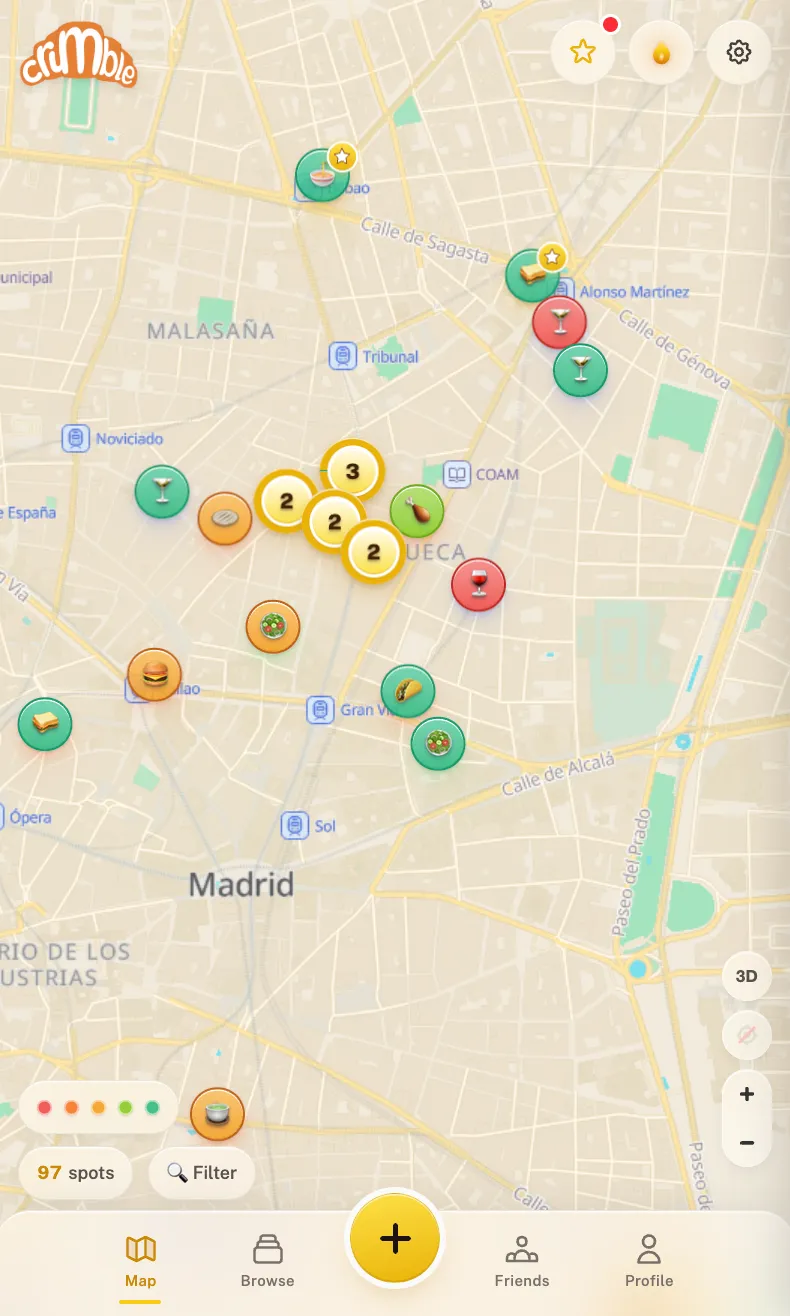
Where tourist traps cluster (the two-streets-back rule)
Tourist traps follow foot traffic, not food. A terrace facing a cathedral pays high rent and serves people it will never see again, so the business works on volume rather than on return visits. A restaurant one or two streets away has to win back the same neighbours every week, and that pressure shows up on the plate.
Our rule of thumb: when you can see a landmark, walk two streets back before you sit down. Prices usually drop, menus get shorter and the language on the chalkboard changes. The usual trap zones are:
- Squares that face a major sight, and the terraces that ring them.
- The main walking route between the station and the old town.
- Waterfront promenades where every terrace has the same chairs and the same menu.
- The streets right next to cruise terminals and tour-bus drop-off points.
- Restaurants built into big hotel lobbies: rarely terrible, rarely a bargain.
It is not an absolute law. Some famous squares have institutions that have fed locals for a century. The rule shifts the odds in your favour; the flags below do the rest.
Red flags: how to spot a tourist trap restaurant
One red flag is a warning. Two or three together are a decision. Each has an exception, because what reads as a trap in Rome can be completely normal in Tokyo.
| Red flag | Why it matters | When it is fine |
|---|---|---|
| A tout outside waving you in | A restaurant that is good and full does not need to recruit passers-by. | Night markets and street stalls, where calling out is part of the culture. |
| Menu in four or more languages, often with little flags | It is written for people who will not come back. | Officially multilingual cities, where two or three languages are normal. |
| Laminated photo menu with faded pictures | Pictures replace a waiter explaining the food. | Japan, Korea and Taiwan, where picture menus and plastic food displays are ordinary even in places locals love. |
| A dish from every country: pizza, paella, schnitzel, curry | No kitchen cooks 60 dishes well. Usually it means a freezer. | Food courts and hawker centres, where each stall does one thing. |
| Kitchen open nonstop at hours locals do not eat | In Spain, dinner at 18:00 is a slot that mostly tourists fill. | Cities with a real late-night or all-day food culture. |
| "Tourist menu" or "menu turistico" sign | Priced and cooked for visitors. | Never confuse it with a local fixed lunch like the menú del día, which is the opposite. |
| No prices, or "market price" you cannot pin down | The bill becomes a negotiation you will lose. | Seafood places that weigh the fish in front of you and say the price first. |
| Empty at peak time while the place next door is full | Locals have already voted. | Very new places; check the opening date. |
Green flags: signs that locals eat there
| Green flag | What it tells you |
|---|---|
| A short menu, handwritten or changing daily | The kitchen buys fresh and cooks what it has. |
| Full at local meal times | In Spain that means lunch around 14:00 to 15:30 and dinner from about 20:30. A busy room at 21:30 in Madrid is a good sign; a busy room at 18:30 is mostly visitors. |
| A weekday lunch set | The menú del día in Spain (a fixed-price three-course weekday lunch), a teishoku set in Japan, the counter of a Turkish esnaf lokantası. These are built for regulars, and they are the best value in town. |
| Menu only in the local language (or local plus one) | The owner is not depending on tourists. |
| One speciality: one dish, one region, one grill | Focus usually beats range. |
| A queue of office workers at lunch | People who eat out every day know price and quality better than any rating. |
| Closed between lunch and dinner | The kitchen runs on local rhythm, not on tourist demand. |
| Regulars greeted by name | The restaurant lives on return visits. |
Research before you go: where locals actually look
The best tips come from people who eat in that city every week, and they write in their own language. English-language rankings lean on visitors, so they drift toward the places visitors find first. Spend your research time on four sources.
1. Local critics and guides
The Michelin Bib Gourmand list is the most useful part of Michelin for travellers: it marks places with "exceptionally good food at moderate prices", and Michelin has used it since 1997. It covers far more than Europe; the Taipei guide alone lists 55 Bib Gourmand places in Taipei and its surroundings. In Italy, look at Gambero Rosso's Ristoranti d'Italia (published since 1990, scores from 60 to 100). In Spain, the Guía Repsol rates restaurants with Soles. In France, Le Fooding (founded in 2000) leans toward younger chefs and a wider price range than Michelin. Local newspaper critics and city food magazines are worth a search too.
2. Local-language review sites, country by country
| Where you are going | Where locals look | How to use it |
|---|---|---|
| Japan | Tabelog | The score is not a plain average: Tabelog weights each reviewer. According to Tabelog, 3.50 and up is roughly the top 3% and 4.00 and up roughly the top 0.07%. Do not dismiss a 3.2: new places and places with only a few reviews sit below 3.50 too. There is an English version. |
| South Korea | Naver Map (KakaoMap second) | Naver Map is the map most Koreans use, with about 70% of Korean map-app users in early 2025. Google Maps is far less used there. Look up your shortlist in Naver Map and read what Korean diners say. |
| Mainland China | Dianping (大众点评) | The big consumer review platform, now part of Meituan. Reviews are in Chinese; a phone translation app is enough to read them. |
| Thailand | Wongnai | Thai restaurant review site and app, strongest in Bangkok. |
| Spain, Italy, France | Guía Repsol, Gambero Rosso, Le Fooding | Critic picks rather than crowd ratings. Good for a first shortlist. |
| Anywhere | Google Maps reviews written in the local language | Sort by newest and read the reviews in the local language first. Locals review differently from visitors. |
3. City subreddits and local forums
Search the city subreddit for "food", "lunch" or the dish you want, and add the year. Look for names that come up in several threads across several years: one enthusiastic comment means little, the same taverna in five threads means a lot. Check that a recommended place is still open before you build a day around it.
4. Friends who have been
A friend whose taste you know beats a stranger with a high rating. Ask for one place, not a list: "If you could eat one meal there again, where?" If your friends log their meals on Crumble, the places they saved and rated show up in that city in Explore.
Reading ratings correctly
Ratings help when you read them as evidence, not as a verdict. Six habits:
- Recency beats the average. Sort by newest. A 4.7 built over ten years says little about the kitchen after a change of chef or owner.
- Count matters. A 4.9 from 30 reviews is weaker evidence than a 4.5 from 3,000.
- Read the three-star reviews. They are the most specific: what was good, what was not, and whether that matters to you.
- Look at who is reviewing. If every review is from a visitor, you have learned who eats there.
- Rankings can be gamed. In 2017 a Vice journalist turned his garden shed into the number one restaurant in London on Tripadvisor with fake reviews, before it had served a single meal (The Shed at Dulwich). A top rank alone proves nothing.
- Scales differ. A 3.6 on Tabelog is a strong score; a 3.6 on Google Maps is a warning. Compare a place only with others on the same platform.
A 20-minute pre-trip routine
You do not need hours of research. Twenty focused minutes give you a shortlist of about ten places near where you will actually be.
| Minutes | Step | You end up with |
|---|---|---|
| 1 to 5 | Pick two or three neighbourhoods: where you sleep and where you will spend most of your days. | A small search area instead of a whole city. |
| 6 to 10 | Pull eight to ten names from local critics and the local review site for that country. | A raw list from people who eat there. |
| 11 to 15 | Check each name in a city subreddit and the newest reviews. Drop anything closed or slipping. Note opening hours and rest days. | A shortlist you can trust. |
| 16 to 20 | Open the city in Crumble Explore, heart the keepers, set your stay as the start point, then use "Make a trip". | A trip grouped by neighbourhood, with a map for each day. |
How the last step works in Crumble: Explore shows one city at a time, with trending places, staff picks and spots your friends and the people you follow have saved. The heart saves a place to your wishlist (up to 2,000 places). Walking, cycling and driving times are rough estimates (≈) from your stay; there is no public transport mode. Once you have two or more likes in a city, "Make a trip" turns them into a trip of up to 7 days grouped by neighbourhood, without AI, and you can share it with the people you travel with. If you do not want to build days yourself, each city has free ready-made days ("A day in…"). The AI day planner (Ask AI / Plan my day) is part of Crumble Plus (free 30-day trial). The app is a web app on iPhone and needs a connection, so keep addresses somewhere offline too.
Want the full app comparison? Google Maps, TheFork, Michelin, HappyCow, Beli and others go side by side in the best apps to find restaurants when traveling. Planning several days around food? See how to plan a food trip.
On the ground: ask the barista, not the concierge
A hotel desk is there to send you somewhere safe and easy to recommend. The barista, the market vendor or the person at the bakery eats lunch in that neighbourhood every working day. Ask them, and ask well:
- Ask where they eat, not what is best. "Where do you go for lunch on a weekday?" gets a real answer. "What is the best restaurant?" gets the famous one.
- Ask about one dish. "Where would you eat ramen around here?" is easier to answer honestly than a general question.
- Follow the lunch crowd. Around local lunchtime, watch where office workers and builders queue.
- Walk the market. Food stalls and small counters inside covered markets feed the people who work there.
- Do a two-minute check. Before you sit down, open the place on the local review site and sort by newest.
- Leave politely if the flags stack up. Seeing the menu is not a commitment. Walking out before you order is normal everywhere.
- Keep a backup within a short walk. Popular places close for holidays and rest days; your shortlist should never hang on one name.
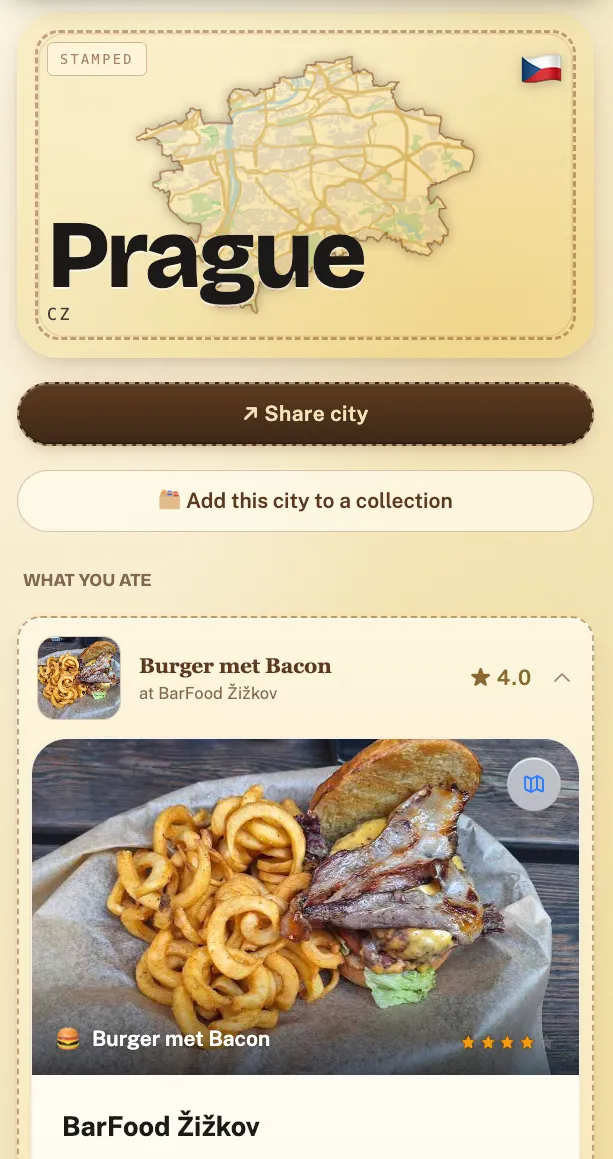
After the trip, the good places are worth keeping. Our guide to tracking food on your travels covers how to remember what you ate and where, and Tripadvisor alternatives compares apps for keeping your own record instead of reviewing for strangers.
Frequently asked questions
How do you know if a restaurant is a tourist trap?
Look for stacked red flags: a tout at the door, a menu in four or more languages, faded photo menus, dishes from every country and an empty room at local meal times. One flag is a warning; two or three together mean walk on. Restaurants on squares facing major sights are the most common traps.
How do you find where locals eat when traveling?
Research in the local language: Tabelog in Japan, Naver Map in Korea, Dianping in mainland China, local critics like Guía Repsol or Gambero Rosso in Europe. On the ground, ask a barista or market vendor where they go for lunch on a weekday, and follow office workers at local lunchtime.
Are Google Maps and Tripadvisor ratings reliable when traveling?
They are useful evidence, not a verdict. Sort reviews by newest, prefer places with many reviews, read the three-star reviews and check whether reviewers are locals. Rankings can be gamed: a journalist once pushed a fake restaurant in his garden shed to number one in London on Tripadvisor.
What is a good Tabelog score?
According to Tabelog, a score of 3.50 or higher puts a restaurant in roughly the top 3%, and 4.00 or higher in roughly the top 0.07%. The score is weighted by reviewer, not a plain average, so places with few reviews, including new openings and hidden gems, often sit below 3.50.
What is the best app to find good restaurants abroad?
It depends on the country. Google Maps works almost everywhere, but local apps win inside their own markets: Tabelog in Japan, Naver Map in Korea, Dianping in China. We compare the main options in our guide to the best apps to find restaurants when traveling.
Is Crumble free for planning where to eat on a trip?
Yes. Browsing a city in Explore, saving places with the heart, ready-made days, building a trip from your likes and sharing it are free. The AI day planner is part of Crumble Plus, which you can try with a free 30-day trial. The app itself is in English.