
Best Food Tracker App for Eating Out
A food tracker app can mean three completely different things, so the best food tracker for you depends entirely on which one you actually want: a calorie tracker that logs the nutrition of everything you eat, a meal and restaurant tracker that helps you remember the places and dishes you loved while eating out, or a tasting journal for coffee, wine, or whisky. This guide is about the second kind: an app to track the food you eat out, not the calories in it.
The word "food tracker" collides on the app stores, which is why so many people install the wrong thing. If you came here to count macros, skip to the note below and go get a nutrition app. That's a genuinely different job and we won't pretend our category replaces it. But if you eat out often and keep forgetting the name of that ramen place, or which dish was the good one, or where a friend took you last spring, then you want a restaurant food tracker: a social food tracker that remembers meals instead of counting them. That's the category this page compares.
Which kind of food tracker do you actually want?
- Calorie / nutrition trackers (MyFitnessPal, Lose It) exist to log what you eat for health, weight, or fitness goals: calories, protein, macros. If that's your goal, these are the right tools and nothing on the rest of this page replaces them. → Go get one of those; the rest of this guide won't help you count.
- Meal / restaurant trackers (Crumble, Beli) are for people who eat out and want to remember the spot and the dish, not the calories. They keep a record of where you ate, what you had, and whether it was worth going back. → This is what the rest of this guide compares.
- Tasting journals (coffee, wine, whisky apps) go deep on one category, scoring each cup or bottle on flavor. → If that's you, Crumble includes six of these free; see the best food diary apps for the wider list.
The food trackers at a glance
| App | Best for | Intent | Platforms | Price |
|---|---|---|---|---|
| MyFitnessPal | Calories, macros, nutrition goals | Calorie tracking | iOS, Android, web | Free (Premium subscription) |
| Crumble | Remembering restaurants + dishes, shared map | Eat-out / social | Web app (installs on iOS, Android, desktop) | Free |
| Beli | Ranked list of restaurants you've visited | Restaurant ranking / social | iOS, Android | Free (optional paid tier) |
| Notes app / spreadsheet | Zero-setup food diary fallback | Personal log | Everywhere | Free |
| Letterboxd-style food diary | Chronological, review-first meal log | Diary / journal | Varies | Free |
1. MyFitnessPal: best calorie tracker (a different job)
MyFitnessPal is the app most people mean when they say "food tracker": a nutrition tracker with an enormous food database and a barcode scanner, built to log calories and macros against a health or weight goal. Lose It plays the same role. If that's what you're after, this is a solid, mature choice and we'll happily point you toward it.
Why it's on this list anyway: because "food tracker" is ambiguous, and half the people searching for one want a calorie counter while the other half want to remember meals out. If you want to log the nutrition of everything you eat, use MyFitnessPal, not Crumble. If you want to remember the restaurant and the dish and never think about calories, read on. These are different tools for different jobs, and using the wrong one is why food trackers get abandoned.
2. Crumble: best food tracker for eating out
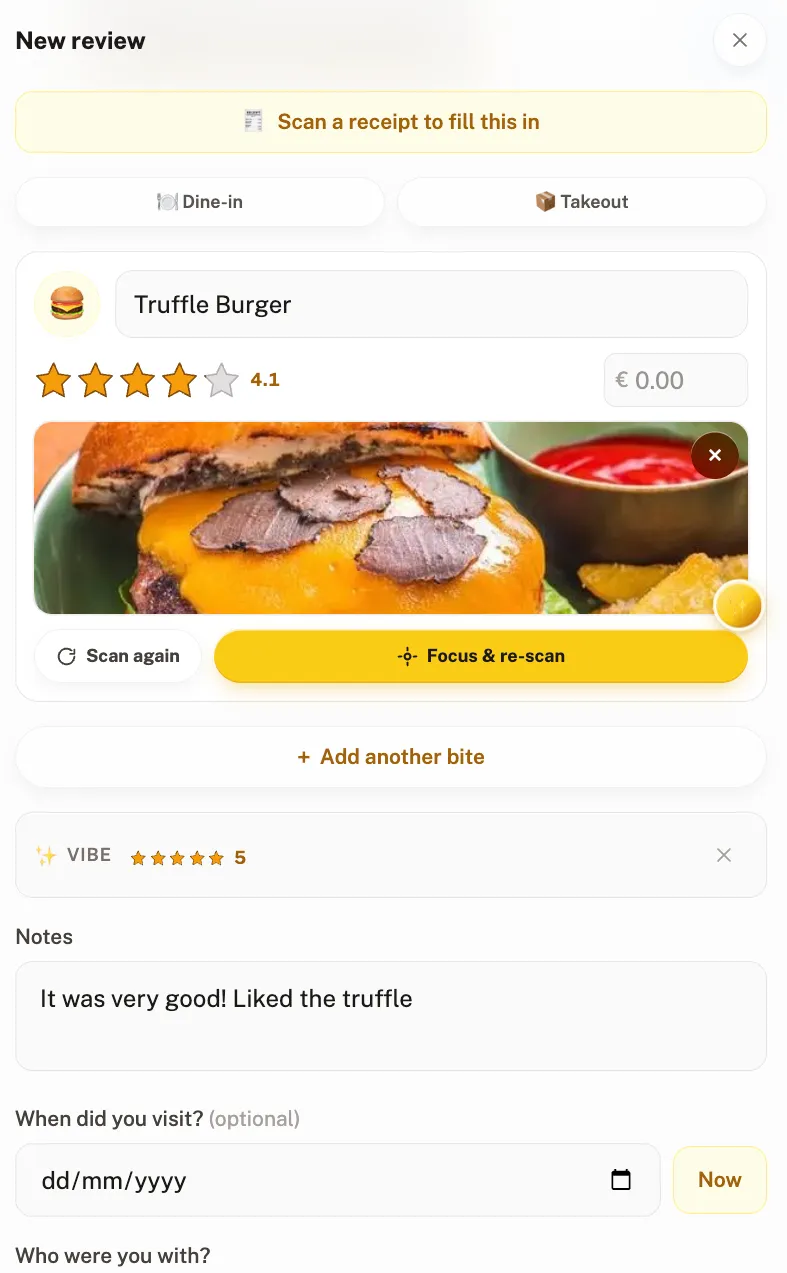
Crumble is a friends-first food tracker for people who eat out: a food tracker that isn't about calories. You log a spot in about thirty seconds: the place, the dish, a rating on a 0–5 scale in tenth-of-a-star steps, and a one-line note. Each review lands on a map you share with the friends you choose, so your food history becomes a place you can actually revisit, and so do your friends finds.
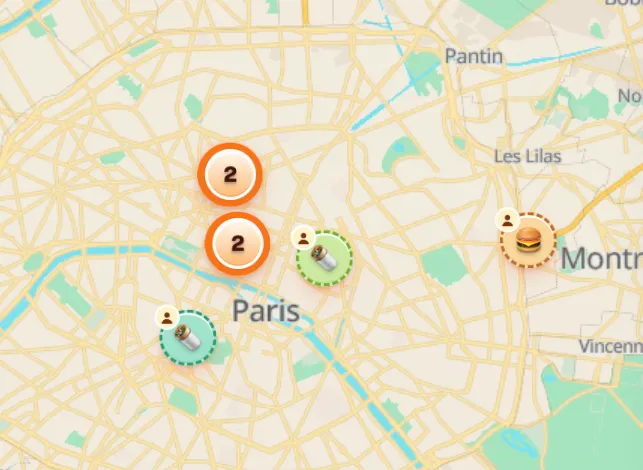
- No calorie counting, anywhere. Crumble tracks the meal, not the macros: the spot, the dish, the rating, the memory. It's a food journal app for eating out, not a nutrition tool.
- Friends-first and private by default. Your reviews go to the friends you choose and nobody else: no public feed, no paid ads, EU-hosted and GDPR-compliant.
- Everything on a map. Built on MapLibre and OpenStreetMap with Foursquare venue data, so every place you've eaten and every place you want to try is one glance away.
- Genuinely free core. Reviewing spots, the shared friends map, your wishlist, and all six tasting journals (coffee, tea, matcha, wine, whisky, beer) are free. A planned Crumble Plus tier, not on sale yet, will add AI food scan (photo → dish), AI label and receipt scan to autofill entries, an unlimited wishlist, the uncapped Crumb Hunt daily game, and a daily XP bonus.
- No app-store install needed. It's a Progressive Web App: open it in any browser and add it to your home screen on iOS, Android, or desktop.
Where it's not for you: if your goal is calorie or macro tracking, Crumble won't do it; use MyFitnessPal. And if you want a strict numeric leaderboard of every restaurant you've ranked, Beli leans harder into that; see our Beli alternatives guide for the honest comparison.
3. Beli: best for ranking restaurants you've visited
Beli is the other app built squarely for tracking restaurants you've eaten at rather than calories. Its signature move is a ranked list: instead of rating in a vacuum, it asks you to compare a new spot against ones you've already been to, producing an ordered leaderboard of your favourites. It's social too, with friend activity and recommendations.
Trade-offs: the comparison-ranking flow is more involved than a quick star rating, the experience is app-store native (iOS and Android) rather than a lightweight web app, and it's US-centred in its data and community. If you want a shared map and a fast tenth-of-a-star log rather than a ranked list, Crumble fits better: full breakdown in Beli alternatives.
4. A notes app or spreadsheet: the zero-setup fallback
Plenty of food diaries start as a phone note titled "places we liked". It costs nothing, syncs everywhere, and captures the one fact that matters: this spot, this dish, yes or no. A spreadsheet adds columns for cuisine, city, price, and a score if you're disciplined about filling them.
Trade-offs: nothing sits on a map, so "somewhere near here we liked" is unanswerable; there's no structure, so six months in you have a wall of inconsistent text; and nothing is shared with friends. It's where food tracking begins, and outgrowing it is usually what brings people to a real food tracker app.
5. A Letterboxd-style food diary: review-first logging
Some people don't want a map or a nutrition label: they want a chronological diary of meals, the way Letterboxd logs films: date, place, a rating, a few lines of review, in order. It's a lovely format for people who like writing about what they ate. We wrote a whole guide on the idea: Letterboxd for food.
Trade-offs: a pure diary is stronger on narrative than on discovery: without a map or friends layered in, it's harder to answer "where should we eat tonight?" from your own history. Crumble runs the diary and the map together, which is the point of a Strava-for-food style tracker.
How to choose
- You want to count calories or macros → MyFitnessPal or Lose It. Nothing else on this list does that.
- You eat out and want to remember spots and dishes → Crumble, especially if you want a shared map and friends.
- You want a ranked leaderboard of restaurants → Beli.
- You want a chronological review diary → a Letterboxd-for-food style log; Crumble covers this too.
- You're only a few meals in → a notes app is fine. Move up when it stops scaling.
Whichever you pick, log the meal while it's in front of you: thirty seconds with the plate on the table beats reconstructing the name of the place a week later. That single habit is what turns a food tracker from an empty app into a map of everything you've loved.
How we chose these apps
We build a food tracker ourselves, which means two things: we know this category from the inside, and we have an obvious conflict of interest. To keep the list honest, every competitor description is drawn from the app's own published materials (its website, App Store or Play Store listing), not from our opinion of it. We included an app when it (a) keeps a record of meals or restaurants you've personally eaten at, or the nutrition of what you ate, (b) attaches your own rating, note, or entry to each one, and (c) offers a usable free tier. Because "best food tracker" has more than one honest answer, we sorted by intent rather than forcing a single ranking, and where a different kind of app is the right choice, we say so plainly: if you want to count calories, MyFitnessPal is the tool, not us.
Frequently asked questions
What's the best app to track restaurants you've been to?
For remembering places you've eaten out (the spot, the dish, and whether it was worth returning to), a meal tracker beats a calorie app. Crumble is built for exactly this: log a restaurant in about thirty seconds, rate it on a 0–5 scale with tenth-of-a-star precision, and see it on a shared map with your friends finds. Beli is the other strong pick if you want a ranked list of everywhere you've been. Both keep a record of where you ate rather than what it did to your macros.
Is there a food tracker that isn't about calories?
Yes. Most apps that call themselves "food trackers" are calorie or nutrition trackers, but a whole separate category exists for remembering meals and restaurants. Crumble is a food tracker with no calorie counting anywhere: you record the spot, the dish, a rating and a note, and it lives on a map you share with friends. If counting is not what you want, this is the kind of app to look for.
How do I track food without counting calories?
Skip the nutrition apps entirely and use a meal journal. The habit is simple: when a dish is in front of you, log the place and the dish, give it a tenth-of-a-star rating out of five, and add one line about why. Over a few weeks you build a personal map of what you actually liked: no macros, no logging every snack, just the meals worth remembering. Crumble is designed around this exact loop and it's free to start.
What app do foodies use to remember meals?
Foodies who eat out a lot tend to reach for a social meal tracker rather than a calorie app: something that keeps a running record of restaurants and standout dishes. Crumble and Beli are the two built for this. Crumble is friends-first (your reviews go to the friends you choose, private by default) and puts everything on a shared map; Beli leans toward a ranked leaderboard-style list. Plenty of people also keep it in a notes app until that stops scaling.
Is Crumble free?
Yes. The core of Crumble is free forever: reviewing spots, the shared friends map, your wishlist, and all six tasting journals (coffee, tea, matcha, wine, whisky, beer). Crumble Plus is a planned optional tier, not on sale yet, that will add AI food scan, AI label and receipt scan, an unlimited wishlist, the uncapped Crumb Hunt daily game, and a daily XP bonus. You never need Plus to track your meals.
Start tracking the food you eat out
Crumble's free tier puts every restaurant you've loved on a map, keeps your wishlist in order, and shares your finds with the friends you choose, no calorie counting, no paid ads, no app-store install. It's the food tracker for people who eat out and want to remember it.