
A Yelp Alternative for Keeping Your Own List
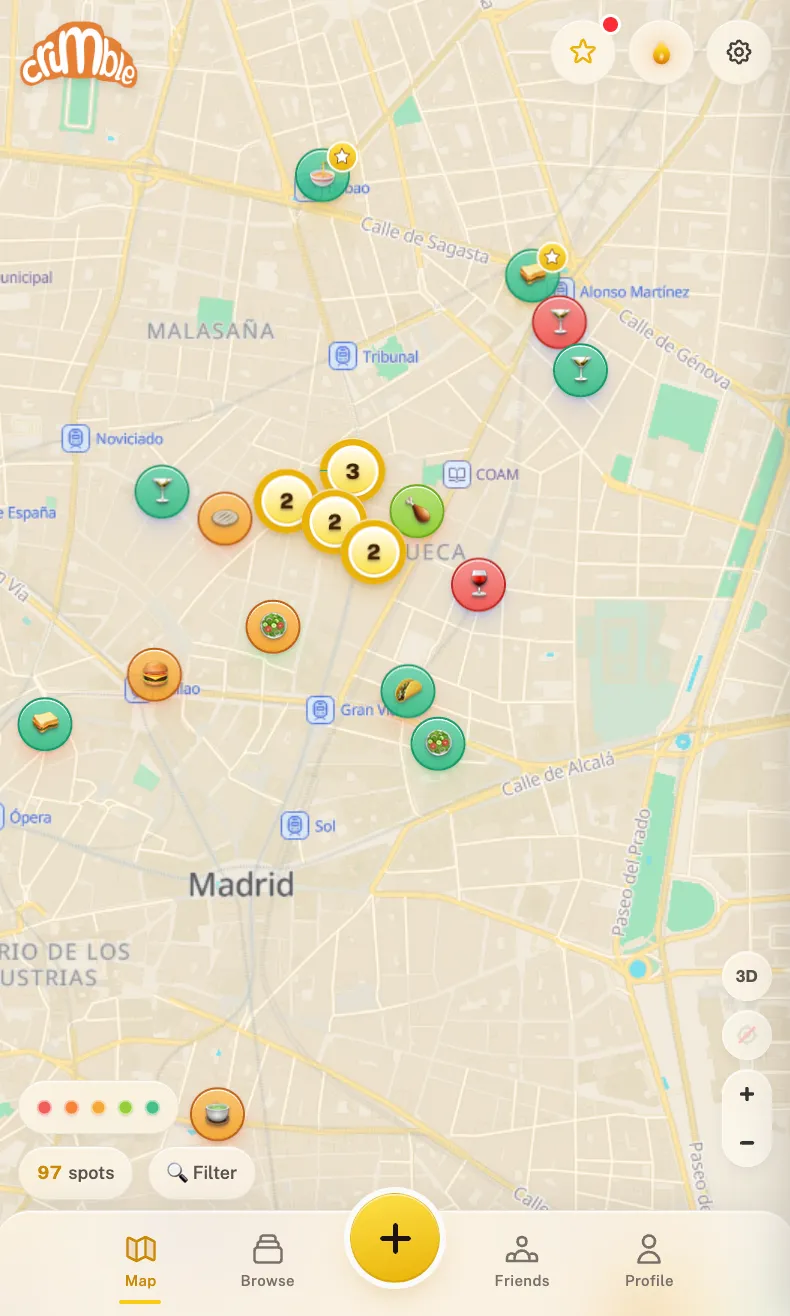
There are two completely different reasons to search for a Yelp alternative, and almost every article conflates them. The first is wanting a better crowd: a different site whose aggregate star ratings you trust more. The second, much more common than the search volume suggests, is wanting somewhere to keep your own list: the places you have been, what you thought, what to order next time.
This page is about the second one, because the first has no good answer. Every review aggregator has the same structural problems as Yelp, and swapping one crowd for another crowd changes the noise, not the shape. What actually changes the outcome is switching from an aggregate of strangers to a record of yourself.
What the star average actually is
Worth being precise, because most people have the wrong model. Yelp does not display every review it receives. Its recommendation software decides which reviews count toward the visible rating, and it does this automatically. Yelp states the same rules apply to advertisers and non-advertisers alike, and an appellate court has affirmed that Yelp describes the software truthfully.
The consequence for you as a diner is straightforward and often missed: the number on the page is an average over a filtered subset, not over everything anyone wrote. Reviews the software judges less reliable are still readable but do not count. That is a defensible design, unfiltered review sites get gamed within weeks, and it also means the 4.0 you are looking at is the output of a process, not a headcount.
Add the ordinary problems every aggregator has, and the picture is clear enough:
- Reviews cluster at the extremes. People write when delighted or furious. The enormous middle, perfectly good dinners, is systematically underrepresented, so a 3.8 and a 4.4 often describe the same restaurant on different nights.
- You have not calibrated against these people. A four from someone who eats out twice a year and a four from someone who eats out four times a week are not the same measurement, and the average treats them identically.
- The average has no memory of you. It cannot know that you dislike loud rooms, that you order vegetarian, or that you have already been and thought it was fine.
- It answers a question you rarely have. "Is this place good in general?" is a question you ask before your first visit. "Where did we like near here?" is the one you ask constantly, forever, and no aggregator can answer it.
The switch that actually helps
The most reliable restaurant recommendation available to you is the one you already made. You have eaten somewhere, you know exactly what you thought, and that opinion is perfectly calibrated to your own taste by definition. The problem is that it is stored in your memory, which is a bad database: it holds maybe the last dozen places and drops the name of the one you loved in Porto.
The second most reliable is a specific friend whose taste you know. Not a crowd containing that friend; the friend. A single person you have agreed with eleven times is a better predictor than ten thousand strangers averaged, and every aggregator dissolves exactly that signal into the mean.
So the alternative to Yelp, for the thing most people actually want, is not another review site. It is a personal record: your places, your score, on a map, with the people whose taste you trust visible on the same map.
Yelp vs a personal record
| Yelp | Crumble | |
|---|---|---|
| Whose opinion | Strangers, filtered and averaged | Yours, then friends you chose |
| Best at | A first visit somewhere unknown | Everywhere you have already been |
| Rating scale | 1–5 stars, whole numbers | 0–5, tenth-of-a-star precision |
| Been vs want to go | Bookmarks, undifferentiated | Two states; the wishlist clears itself |
| Dish notes | Buried in review prose | A field on every review |
| Business ads | Core to the model | None |
| Your data | Public reviews on their platform | Private by default, friends-only |
| Answers "what did we like near here?" | No | Yes, that is the map |
| Price | Free | Free |
When to still use Yelp
Not a page arguing you should delete it. Yelp remains the better tool for a genuine set of jobs, and a personal tracker is useless at all of them:
- Somewhere you have never been, with nobody to ask. An unfamiliar city and an empty personal map is exactly when a crowd beats no data at all.
- Practical facts. Opening hours, whether the kitchen is still serving, the phone number, photos of the room. This is reference material and aggregators are good at it.
- Catastrophe detection. Averages are unreliable at the top and quite reliable at the bottom. A 2.1 with four hundred reviews is telling you something true.
- Categories where your own history is thin. First time looking for a late-night place in a new neighbourhood, the crowd is all you have.
The division is clean: use the crowd to decide where to go the first time, use your own record for everything after that. The mistake is using the crowd for the second job, which is what most people do by default because there is nowhere else to put the information.
What about the reviews you already wrote?
If you have written reviews on Yelp over the years, the instinct is to want them back. Worth separating two things here.
The text you wrote is yours in the sense that matters: you can request a copy of your data from Yelp and keep it. What you cannot take with you is the context: the place pages, the photos other people added, the thread of the thing. That is the platform, not your writing.
The more useful realisation is that you almost certainly do not want them back. Public reviews are written for an audience, and it shows: they explain, they justify, they hedge in case the owner reads it. A note to yourself is a different genre: "great, sit at the bar, get the mackerel" is more useful to future-you than four paragraphs of balanced assessment, and takes eight seconds instead of ten minutes.
So do not bulk-migrate. Write down the twenty places you would actually recommend to a friend right now, in the terse form, and let the rest go. That list is better than three years of your own public reviews, because it has already been filtered by the only thing that matters: whether you still think about them.
Starting your own list from nothing
The obvious objection is that a personal map begins empty and an aggregator begins with millions of reviews. True, and it matters less than it sounds, because the two are not competing over the same set of places. You need roughly fifteen entries before your own map is more useful to you than Yelp is for your home city, and that is about two months of ordinary eating.
The fastest way there is not to backfill years of history: you will not remember accurately and the entries will be worse than nothing. Start with the places you would recommend to a friend today, which is a list you can write in ten minutes because you already carry it. Then add each new place as you go, at the table, before the memory degrades.
Crumble is free, private by default and friends-only rather than public. Reviews take about fifteen seconds and carry a 0–5 score with tenth-of-a-star precision, a dish note, and a wishlist that removes a place automatically once you review it. For the wider category, our roundup of the best restaurant tracking apps is the fair comparison, and how to keep track of restaurants covers method before tooling. If you currently keep pins, read Google Maps lists alternatives; if you keep a sheet, the Google Sheets template is worth reading first; and if you want a private list rather than a public profile, a private restaurant list is the closest page.
Frequently asked questions
What is the best alternative to Yelp?
It depends which job you mean. For crowd ratings in a city you do not know, Google Maps has more coverage and Yelp still has more depth in the US. Swapping one aggregator for another changes little. For keeping your own list of places you have been, with your ratings and what to order, you want a personal food tracker rather than a review site, because that is a different job that no aggregator does.
Why do Yelp ratings not match my experience?
Three reasons stack up. Reviews cluster at the extremes because people write when delighted or furious, so the ordinary middle is missing. You have never calibrated against the reviewers, so their four and your four are different measurements. And the displayed average is computed over the reviews Yelp's recommendation software judges reliable, not over everything submitted: a defensible design, and one that means the number is the output of a process rather than a simple headcount.
How do I keep track of restaurants I have been to?
Record three things at the table, before the memory degrades: a score on a scale you never change, the dish worth ordering next time, and whether you would go back. Keep them on a map rather than in a list, because the question you will actually ask is spatial: what did we like near here. A dedicated tracker does this in about fifteen seconds per place; a spreadsheet works too if you will genuinely keep filling it in.
Is there a private alternative to Yelp?
Yes. The assumption that a restaurant opinion should be published to strangers is a choice review sites made, not a requirement. A private tracker keeps your ratings visible only to you and the friends you add, which also makes the ratings more honest: people score differently when a business owner might read it. Crumble works this way by default.
Are friends better than reviews for restaurant recommendations?
For places you might actually go, usually yes. One friend whose taste you have agreed with repeatedly is a better predictor than thousands of strangers averaged, because averaging destroys exactly the signal you need: that this specific person liked it. Crowds remain better for practical facts like opening hours, and for spotting genuinely bad places, where low averages with many reviews are quite reliable.